The post Valentine’s Day Tips from the Pros appeared first on The United Food & Commercial Workers International Union.
]]>A little bubbly goes with everything.
Rob Peters, UFCW Local 1776 member and Wine Specialist, Fine Wine & Good Spirits store 4646 in Ardmore, PA says “When it comes to Valentine’s Day, I always recommend sparkling wine because it is popular, versatile and celebratory, i.e. ‘pop the cork.’ Sparkling wine can be used at any time before, during or after dinner.”

There are many varieties of sparkling wine, but Rob recommends sparkling wines from California, Prosecco from Italy or the classic: champagne from France.
Chocolate is always a winner.
When you give a box of Russell Stover, Ghiradelli chocolate or Hershey’s Hugs and Kisses, know they taste a little sweeter because they are made with love by talented UFCW members. Making chocolates is an art form, one your Valentine is sure to love.
UFCW members who make See’s candies craft each chocolate confection by hand. More care and expertise is needed than you might think. Take a look at what goes into the making of these tasty treats and get a glimpse inside the plant where Lucy and Ethel of the classic TV show “I Love Lucy” found out they couldn’t quite hack it:
Say it with Flowers
Feel a bit lost in the floral department? Our members work as florists in grocery stores across the country and are happy to help you put together a bouquet.
And if you are a UFCW member yourself, remember you can save 25% on flowers from Teleflora year round.
Discount Includes:
- 25% discount on flowers & gifts per order
- Same-day flower delivery service (If ordered before 2 p.m. Monday-Friday or 12 p.m. Saturday or Sunday in recipient’s time zone)
- Unconditional 100% satisfaction guarantee on a wide selection of expertly designed flower arrangements, gifts, green and blooming plants and wreaths
- International service (with three-day delivery guarantee; orders for delivery outside the U.S. and Canada taken by phone only.)
Your 25% discount should be applied automatically. If you encounter any issues accessing your 25% discount, simply type BAAUP25 in the Promotion Code box during checkout.
The post Valentine’s Day Tips from the Pros appeared first on The United Food & Commercial Workers International Union.
]]>The post “We need someone to fight for our rights and to be there when we need help.” appeared first on The United Food & Commercial Workers International Union.
]]>
On Nov. 10, 15 maintenance workers employed at Colonnade Apartments in Newark, N.J., voted overwhelmingly to join RWDSU/UFCW Local 108.
The hardworking men and women were concerned about low pay, health and safety issues, and the lack of retirement benefits. Workers were also concerned about being paid for all of the hours they worked.
“I am happy we voted the union in to represent us,” said Pedro Parada, a porter at Colonnade Apartments. “We need someone to fight for our rights and to be there when we need help. The company has been doing whatever they want to us.”
“I feel happy that we now have a union,” said Elva Rodriguez, who works as a janitor at Colonnade Apartments. “I am thankful for them being there for us. I know they are going to help and care for us.”
“This was truly a needed victory,” said Abraham Asabor, an organizer with RWDSU/UFCW Local 108. “This small group of workers are expected to be Jack-of-all-trades. They not only keep the building clean, they are required to do building and apartment upkeep, painting, plumbing, AC and heating and apartment clean outs.”
“They are required to be on call and they are not properly compensated,” Asabor added. “To add insult to injury, they are treated with disrespect and paid low wages. This is the second building we have organized in the past month and the problems are similar. We will fight hard to make sure these workers receive better working conditions.”
“Most importantly, these workers weren’t being treated with any respect, and they wanted to change that,” said RWDSU/UFCW Local 108 President Charles N. Hall, Jr.
The post “We need someone to fight for our rights and to be there when we need help.” appeared first on The United Food & Commercial Workers International Union.
]]>The post “Better things for me means better things for my family and that better future is why I formed a union at my work.” appeared first on The United Food & Commercial Workers International Union.
]]>
This month, workers at Ardent Mills, a food company in Chattanooga, Tenn., chose a union voice and a better life with UFCW Local 1995. Ardent Mills workers produce flour for breading for fried foods, cakes and pies eaten in restaurants across the country.
“I have two children and my family is my whole world,” said Mike Middleton, a maintenance tech at Ardent Mills who has been with the company for more than eight years. “Better things for me means better things for them and that better future is why I formed a union at my work.”
Workers at Ardent Mills have suffered through cutbacks and reductions in benefits due to a corporate acquisition three years ago with no way to have a voice in the direction of their company. Now, workers at Ardent Mills will have the opportunity to negotiate an agreement that will help them address issues at work, raise wages and benefits, and get the respect they deserve.

“Workers at Ardent Mills deserve better,” said Rick Major, secretary-treasurer of UFCW Local 1995. “They’ve earned respect and a job that lets them support their families and give back to the community they live in.”
The post “Better things for me means better things for my family and that better future is why I formed a union at my work.” appeared first on The United Food & Commercial Workers International Union.
]]>The post Not a Union Member? It Could Cost You appeared first on The United Food & Commercial Workers International Union.
]]>[aesop_quote type=”block” background=”#2695b9″ text=”#ffffff” align=”left” size=”2″ quote=”A new report from the Economic Policy Institute (EPI) shows that the declining rate of union membership is costing nonunion workers $133 billion annually in lost wages.” parallax=”on” direction=”right”]
A new report from the Economic Policy Institute (EPI) shows that the declining rate of union membership is costing nonunion workers $133 billion annually in lost wages. This massive sum – which is more than the economic hit workers take when we enter into unfair trade agreements with low-wage countries – is a key reason why hardworking Americans are struggling with stagnant wages and inequality.
[aesop_quote type=”pull” background=”#ffffff” text=”#cd9727″ width=”30%” align=”right” size=”2″ quote=”This new report from EPI confirms that union membership is the one clear path to a better life.” cite=”UFCW International President Marc Perrone” parallax=”on” direction=”left”]
EPI found that by establishing pay and benefit standards, unions boost wages for all workers. In fact, if union density in 2013 was as high as it was in 1979, nonunion private sector men would have earned an extra $52 each week. This is the first study providing a broad estimate of the wage decline for nonunion workers as a result of the erosion of unions.
This report should also remind us that the benefits of a union contract goes beyond wages.
Earlier this year Oxfam America published a report titled No Relief: Denial of Bathroom Breaks in the Poultry Industry, which documented the union difference when it comes to workplace rights and safety. This shocking study found that nonunion workers wore diapers when denied bathroom breaks by irresponsible employers.
Also, a union contract is often the only way women can earn equal pay for equal work and, in some states, the only line of defense for all workers facing workplace discrimination. Finally, according to the Center for Economic Policy and Research, black union workers experience higher wages and better access to health insurance and retirement benefits than their non-union peers.
“This new report from EPI confirms that union membership is the one clear path to a better life,” said UFCW International President Marc Perrone. “Now more than ever, we in labor must discuss openly the amazing benefits that come to people who join unions. The UFCW union family is committed to proving that we can bring better jobs and futures to every hard-working community.”
The post Not a Union Member? It Could Cost You appeared first on The United Food & Commercial Workers International Union.
]]>The post New York Child Care Grant Benefits RWDSU/UFCW Members appeared first on The United Food & Commercial Workers International Union.
]]>
The RWDSU/UFCW is part of the New York Union Child Care Coalition, a group of unions that developed and promoted the Child Care Facilitated Enrollment Project to help provide affordable child care for working families in the state. By working with New York State Senators Jeff Klein and Diane Savino, the RWDSU/UFCW was instrumental in helping to establish the program.
And RWDSU/UFCW members are starting to benefit. Elsa Barrera is a Local 1102 member and a mother of three. On top of her dedication to raising her three children, Elsa also works full-time at Flying Foods – an airplane food service supplier – at JFK airport. Barrera has received a grant from the program, and will be able to send two of her children to a camp program for the summer at nearly no cost. This support will help Elsa make ends meet and help her children receive the care and security they deserve.
“Workers like Elsa are truly deserving of this kind of grant,” said RWDSU/UFCW Deputy Political Director Jessica Garcia. “This program will help many others provide for their families while ensuring their children get quality care.”
Other RWDSU/UFCW members at Macy’s and H&M have also seen their child care costs drastically reduced thanks to the program.
The post New York Child Care Grant Benefits RWDSU/UFCW Members appeared first on The United Food & Commercial Workers International Union.
]]>The post UFCW Local 21 Member Speaks at the White House United State of Women appeared first on The United Food & Commercial Workers International Union.
]]>
Ariana Davis, a UFCW Local 21 member who works at Safeway, spoke at the White House United State of Women Summit in Washington, D.C. She shared the stage with President Barack Obama, First Lady Michelle Obama, Vice President Joe Biden, actress Kerry Washington and Oprah to discuss key gender equality issues.

Ariana presented with AFL-CIO Secretary-Treasurer Liz Shuler about the best way to give working women equal pay and an equal say – a union. Equal pay, fair schedules, paid leave – the bottom line is that if we stand together and negotiate together, we win together.

In front of a crowd of 5,000 people, Ariana shared her experience with being a part of UFCW Local 21 in Seattle. “Being in a union has allowed me to negotiate for and win higher wages, good benefits and economic stability. But the truth is, the power of a union is about much more than dollars and cents. I’ve stood up for my friends at work who were being disrespected by management. And I helped them get justice on the job. That’s a powerful feeling. I am a force in my community.”

Evidence shows that union membership increases wages for all workers, but women experience especially large advantages. Women are the primary breadwinners in 38% of American households – paying them less for no reason puts millions of families and communities at a disadvantage.

Back in the other Washington, Ariana has been busy collecting thousands of signatures as the citizen petitioner behind Initiative 1433, a statewide ballot measure which will raise the minimum wage to $13.50 and provide workers with up to seven days of paid sick leave.

6.8 million women in America belong to a union. Thanks to Ariana, more people know why.
The post UFCW Local 21 Member Speaks at the White House United State of Women appeared first on The United Food & Commercial Workers International Union.
]]>The post New Report Highlights Uneven Access to Paid Leave and Predictable Schedules appeared first on The United Food & Commercial Workers International Union.
]]>
Image via Center for American Progress
A new report by the Center for American Progress underscores the uneven access to paid leave and fair schedules in the American workforce and the need for legislation to address these issues.
Titled Who Gets Time Off? Predicting Access to Paid Leave and Workplace Flexibility, the report examines the schism between workers in higher paid jobs, who are more likely to have benefits such as paid leave and workplace flexibility, to lower- and middle-income workers, who are less likely to have access to these benefits. According to the report, nearly 40 million workers, or 39 percent of the workforce, still lack access to even a single paid sick day. In particular, hourly workers, workers with jobs in the service industry, and Latino workers are less likely to have access to paid sick days and other workplace benefits. Conversely, older workers, full-time workers, and workers with higher earnings are more likely to have access to employer provided paid sick days, workplace flexibility and predictable schedules.
More needs to be done to address the huge swath of American workers who are at the mercy of their employers and at risk of losing wages or being fired if they need time off to recover from an illness or care for a family member. While legislation has been introduced to address access to paid leave and workplace flexibility, it is still too slow and uneven to affect the majority of working families. Since 2002, only three states have passed laws to provide workers with access to paid family leave; 23 cities and five states have guaranteed workers the right to earned sick leave; and one city and one state have implemented policies to ensure that workers have access to fair schedules.
A full copy of the report can be found here.
The post New Report Highlights Uneven Access to Paid Leave and Predictable Schedules appeared first on The United Food & Commercial Workers International Union.
]]>The post MORE WORKERS ORGANIZING IN THE FACE OF WEALTH INEQUALITY appeared first on The United Food & Commercial Workers International Union.
]]>UFCW announces 100 organizing wins in roughly 100 days in 2016.

Washington, D.C. –Today, the United Food and Commercial Workers International Union (UFCW), America’s largest private sector labor union, announced its 100th organizing campaign win of 2016. UFCW’s 100 wins in 100 days reflects the frustration felt by hard-working people across this country. The economic pressure felt by working Americans is higher than ever and more and more of them are looking to unions for relief.
“A national conversation about wealth inequality is occurring in packing houses and on the floors of retail stores all over the country,” said UFCW International President Marc Perrone. “UFCW has 100 examples of how these conversations are moving workers to form a union and take action. Workers are realizing that partnering with an established union can help secure the wages and benefits that put them on a path to a better life.”
Wealth inequality has become a dominant issue in this year’s Presidential primaries. In both parties, large crowds of voters assembled for candidates campaigning on a message of economic populism. Concurrently, UFCW field organizers saw that same enthusiasm cross over into their campaigns. Increased attention to wages and inequality has motivated people to become UFCW members.
- Workers in 26 out of 50 states have already joined UFCW this year.
- Over 50 percent of UFCW locals have had successful organizing drives
- 55 percent of adults under 30 hold a favorable view of unions (Pew).
- In 10 years, millennials will make up 75 percent of the global work force,
###
UFCW is the largest private sector union in the United States, representing 1.3 million professionals and their families in grocery stores, meatpacking, food processing, retail shops and other industries. Our members help put food on our nation’s tables and serve customers in all 50 states, Canada and Puerto Rico.
Learn more about the UFCW at www.ufcw.org.
The post MORE WORKERS ORGANIZING IN THE FACE OF WEALTH INEQUALITY appeared first on The United Food & Commercial Workers International Union.
]]>The post 11 Important Facts About Latinos in the U.S. Workforce to Keep in Mind During Hispanic Heritage Month appeared first on The United Food & Commercial Workers International Union.
]]>Originally posted by AFL-CIO

In a new report released this week, Latino Workers and Unions: A Strategic Partnership for America’s Progress, the Labor Council for Latin American Advancement details the work environment for Latinos in the U.S. workforce. The picture the report paints isn’t a pretty one. Here are 11 important facts about Latino workers in the United States:
1. The Latino population is the fastest growing group in the United States, currently at more than 55.4 million (17% of the overall population).
2. More than 26 million Latinos represent about 15% of the workforce, a number expected to nearly double by 2050.
3. In 2013, nearly one in four Latino families lived below the poverty line, nearly twice the national poverty rate.
4. Nearly one-fourth of Latinos work in low-wage jobs.
5. In 2014, the Latino unemployment rate was 6.7%, above the national rate of 5.5%.
6. In 2014, the average nonunion Latino made just $547 a week.
7. More than two-thirds of Latinos lack retirement accounts, and more than 80% of Latino households have less than $10,000 in retirement savings.
8. Nearly 30% of Latinos lack health insurance.
9. More than three-fourths of Latino workers work in jobs where they face minimum wage or overtime pay violations.
10. In 2013, nearly 800 Latinos died at U.S. workplaces, the highest total since 2008.
11. Latinas on the job earn only 56% of what a white man earns and more than 75% of Latinas in the southern part of the United States report sexual assault being an issue in the workplace.
The report says that the key way for Latinos to improve this situation is through unions, a partnership that will yield many benefits for unions, too. The report concludes:
Although the current outlook for Latinos is uncertain, their potential for growth is impressive. Wielding over $1.5 trillion in purchasing power, making huge gains in the workforce and electorate, it’s no surprise that the future for Latinos can be drastically different and positive. But in order to realize this potential, Latinos must harness their strengths and exert their voice in the workplace.
Gaining access to a union will be an essential step for Latino workers and their families. Through union representation, Latinos can achieve higher wages that will help them fight poverty and gain access to health and retirement benefits.
The post 11 Important Facts About Latinos in the U.S. Workforce to Keep in Mind During Hispanic Heritage Month appeared first on The United Food & Commercial Workers International Union.
]]>The post Honoring the History of Labor Day appeared first on The United Food & Commercial Workers International Union.
]]>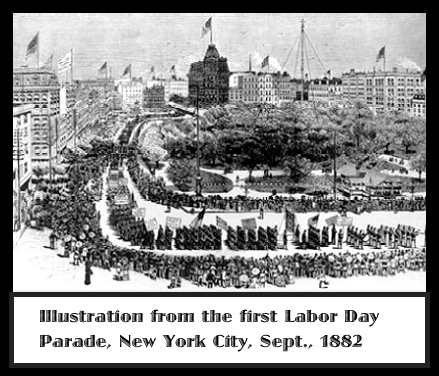
While most Americans view Labor Day as the last long weekend of the summer and another day off work, the history behind the holiday was actually a result of one of the most intense and violent struggles for workers’ rights.
In 1894, during a time of severe economic and social unrest, thousands of workers at the Pullman Palace Car Company went on strike to protest the way George Pullman, founder and president of the Pullman Palace Car Company, treated his workers. Pullman was one of the wealthiest men in the Chicago area, and subjected his workers to high rents and low pay in the company town he had built for them near the factory. His actions forced many of his workers into debt and poverty. When his workers rebelled and went on strike with the support of Eugene Debs and the American Railway Union, Pullman gained the support of President Grover Cleveland, who ordered federal troops to intervene—leading to a bloody confrontation and the deaths of more than 30 Pullman workers. Soon afterwards and amid growing criticism to the brutal response to the striking workers, President Cleveland established Labor Day as a national holiday in an effort to appease organized labor.
One hundred and twenty-one years after the Pullman Strike, our country is still grappling with economic and social unrest as income inequality persists and the right of workers to stick together for better workplace conditions continues to be challenged. Too many American workers are struggling to survive in low-wage, part-time jobs that hamper their ability to move up the economic ladder. And the sheer desperation of many Americans who simply want to work has enabled many companies to cut wages and hours, misclassify workers as independent contractors or hire temporary workers to avoid providing benefits, subject their workers to erratic scheduling practices, and punish those who speak out for better workplace conditions.
Many of these abuses are a direct result of the smaller number of unionized workers. Fortunately, America’s workers are realizing that the key to economic prosperity for working people is power in numbers. Across the country, thousands of low-wage, part-time workers are leading the fight to narrow the wealth gap by sticking together for better wages and benefits. Like the Pullman workers, they are standing up to their wealthy employers through strikes and protests in the face of threats and intimidation. Some have even lost their jobs in their fight for a voice on the job. Despite these setbacks, they continue to call attention to our country’s increasing reliance on low-wage, part-time jobs and its devastating effect on American workers.
This Labor Day, let’s take time to remember those before us who stood up to powerful corporate and political interests to fight for a better life and a more equitable society. Let’s honor them by focusing on the power we all have to define a brighter path forward for the millions of workers and their families who deserve and have earned a better life.
The post Honoring the History of Labor Day appeared first on The United Food & Commercial Workers International Union.
]]>