AFL-CIO Archives - The United Food & Commercial Workers International Union
https://www.ufcw.org/tag/afl-cio/
Official website of the United Food and Commercial Workers International UnionTue, 08 Sep 2020 17:27:31 +0000en-US
hourly
1 https://wordpress.org/?v=7.1.2https://www.ufcw.org/wp-content/blogs.dir/61/files/2020/08/cropped-android-icon-192x192-1-32x32.pngAFL-CIO Archives - The United Food & Commercial Workers International Union
https://www.ufcw.org/tag/afl-cio/
3232UFCW International President Awarded Highest Honor from AFL-CIO Civil Rights Committee
https://www.ufcw.org/ufcw-international-president-awarded-highest-honor-from-afl-cio-civil-rights-committee/
Wed, 18 Jan 2017 17:15:30 +0000http://www.ufcw.org/?p=25141On Jan. 15, UFCW International President Marc Perrone was presented with an award at the AFL-CIO’s 2017 Dr. Martin Luther King, Jr. Civil and Human Rights Awards Luncheon and Community Service Weekend. The theme of the awards this year was “The Struggle Is Free, But the Dream Must Be Televised” to represent the constant battle for […]
On Jan. 15, UFCW International President Marc Perrone was presented with an award at the AFL-CIO’s 2017 Dr. Martin Luther King, Jr. Civil and Human Rights Awards Luncheon and Community Service Weekend.
The theme of the awards this year was “The Struggle Is Free, But the Dream Must Be Televised” to represent the constant battle for civil rights and justice that continues in our country.
At the ceremony, President Perrone was awarded the “At the River I Stand” Award from AFL-CIO President Richard Trumka for his work towards advancing civil and labor rights, saying “we will tear our borders down brick by ignorant brick.”
The “At the River I Stand” award is the highest honor given by the AFL-CIO Civil and Human Rights Executive Council Committee. The name of the award comes from the historic words used to capture the spirit of the 1968 Memphis sanitation workers during their courageous struggle for workers’ and civil rights.
Alongside his fellow award recipient, USW Vice President Fred Redmond, President Perrone has served as a fearless leader of the Labor Commission on Racial and Economic Justice, taking action to serve the needs and concerns of their members, and shepherding the Labor Commission report to help union leaders have a better understanding of how racism and racial politics has impacted and continues to shape the labor movement.
Upon accepting his award, President Perrone addressed the attendees, emphasizing that “we must stand together stronger than ever” in our quest for justice.
]]>Chip In To Help a Local 400 Family Devastated by Flooding
https://www.ufcw.org/chip-in-to-help-a-local-400-family-devastated-by-flooding/
Fri, 08 Jul 2016 17:12:25 +0000http://www.ufcw.org/?p=24386Reposted from UFCW Local 400 Violent flooding has devastated thousands of households in West Virginia. Pitch in today to help a Local 400 family who has lost everything. Coast Guard Marine Safety Unit Huntington Western River Flood Punt Team provides lifejackets to locals near Clendenin, West Virginia, June 24, 2016. The team is assisting the […]
Violent flooding has devastated thousands of households in West Virginia. Pitch in today to help a Local 400 family who has lost everything.
Coast Guard Marine Safety Unit Huntington Western River Flood Punt Team provides lifejackets to locals near Clendenin, West Virginia, June 24, 2016. The team is assisting the West Virginia State Emergency Operation Center by providing disaster and relief assistance in response to the widespread flooding. U.S. Coast Guard photo
Imagine losing your home, your car – even your loved ones – after a typical summer rain storm quickly turned into a devastating flood. Imagine clinging to your children for hours while you await rescue, watching helplessly as your family home floats away in violent flood waters.
This is the reality facing thousands of families in West Virginia.
At Local 400, at least 18 members and their families have been affected. Thirteen families have had their homes and vehicles completely destroyed, their hometowns nearly washed off the map. Others have lost vehicles, clothing and family heirlooms. Everyone has weeks of clean up yet to come.
This is a time to come together as a union family and support our brothers and sisters in need. Many communities will never be the same. At least 22 people have lost their lives as a result of the disaster. Even today, clean up and rescue efforts are still ongoing as subsequent tornadoes and thunderstorms continue to hamper first responders.
Your tax-deductible donation will be processed through the West Virginia AFL-CIO Disaster Relief Fund and given directly to a Local 400 family in need.
Together, we will get through this. We are a union family and we will be there for each other.
]]>UFCW Local 21 Member Speaks at the White House United State of Women
https://www.ufcw.org/ufcw-local-21-member-speaks-at-the-white-house-united-state-of-women/
Wed, 15 Jun 2016 13:52:06 +0000http://www.ufcw.org/?p=21690Ariana Davis, a UFCW Local 21 member who works at Safeway, spoke at the White House United State of Women Summit in Washington, D.C. She shared the stage with President Barack Obama, First Lady Michelle Obama, Vice President Joe Biden, actress Kerry Washington and Oprah to discuss key gender equality issues. Ariana presented with AFL-CIO […]
Ariana Davis, a UFCW Local 21 member who works at Safeway, spoke at the White House United State of Women Summit in Washington, D.C. She shared the stage with President Barack Obama, First Lady Michelle Obama, Vice President Joe Biden, actress Kerry Washington and Oprah to discuss key gender equality issues.
Ariana presented with AFL-CIO Secretary-Treasurer Liz Shuler about the best way to give working women equal pay and an equal say – a union. Equal pay, fair schedules, paid leave – the bottom line is that if we stand together and negotiate together, we win together.
In front of a crowd of 5,000 people, Ariana shared her experience with being a part of UFCW Local 21 in Seattle. “Being in a union has allowed me to negotiate for and win higher wages, good benefits and economic stability. But the truth is, the power of a union is about much more than dollars and cents. I’ve stood up for my friends at work who were being disrespected by management. And I helped them get justice on the job. That’s a powerful feeling. I am a force in my community.”
Evidence shows that union membership increases wages for all workers, but women experience especially large advantages. Women are the primary breadwinners in 38% of American households – paying them less for no reason puts millions of families and communities at a disadvantage.
Back in the other Washington, Ariana has been busy collecting thousands of signatures as the citizen petitioner behind Initiative 1433, a statewide ballot measure which will raise the minimum wage to $13.50 and provide workers with up to seven days of paid sick leave.
6.8 million women in America belong to a union. Thanks to Ariana, more people know why.
]]>Black History Month Member Profile: Hidi Frazier of Local 1996
https://www.ufcw.org/black-history-month-member-profile-hidi-frazier-of-local-1996/
Mon, 29 Feb 2016 10:44:14 +0000http://www.ufcw.org/?p=21128As the UFCW continues to honor Black History Month and reinforces its commitment to racial and economic justice, we’re asking members why these issues matter to them. Hidi Frazier of Local 1996 has worked for Kroger in Georgia for 15 years. As a Deli Manager, she oversees both the deli and bakery, trains new associates, takes inventory, and makes orders. Hidi […]
As the UFCW continues to honor Black History Month and reinforces its commitment to racial and economic justice, we’re asking members why these issues matter to them. Hidi Frazier of Local 1996 has worked for Kroger in Georgia for 15 years. As a Deli Manager, she oversees both the deli and bakery, trains new associates, takes inventory, and makes orders.
[aesop_quote type=”pull” background=”#282828″ text=”#ffffff” width=”30%” align=”right” size=”2″ quote=”A lot of issues affects us all in one way or another. We all want fair wages, good health benefits and good pensions. We all have to continue to stand together and keep working families strong.” cite=”Hidi Frazier, UFCW Local 1996″ parallax=”on” direction=”left”]
Hidi says that to her, “Black History Month … is about honoring and remembering those who made a difference and paved the way for people like me. Without their sacrifice and determination to want and fight for change, I wouldn’t be where I am today.”
Hidi first became active in her union seven years ago when a fellow member asked if she’d like to volunteer with phone banking to ask fellow members to vote and help get labor-friendly candidates elected in her state who will make a difference for working families. She agreed, and has been an active member ever since.
During her time volunteering, Hidi was inspired by Mary Lou Romaine-Waymer, who leads and organizes the phone banks and other political activities for the local: “She does a great job. Mary Lou Wagner is a leader for UFCW. She keeps the members well informed in local and state politics. Mary Lou reminds us that these races are the most important because they affect our everyday lives as citizens of Georgia.”
After seeing first-hand just how much of a difference being part of union family makes in her life, Hidi wants to spread the word. As a manager, she’s in a unique position to help explain to her fellow coworkers what the union is all about. “I would advise everyone, not just African Americans, to become involved. A lot of issues affects us all in one way or another. We all want fair wages, good health benefits and good pensions. We all have to continue to stand together and keep working families strong,” she says
[aesop_quote type=”pull” background=”#282828″ text=”#ffffff” width=”30%” align=”left” size=”2″ quote=”When union members, community members, and other working people come together, we are more powerful.” parallax=”on” direction=”left”]
Hidi also stresses the importance of solidarity. “We have the AFL-CIO, where all the unions come together to keep the fight going for working families,” she says. “When union members, community members, and other working people come together, we are more powerful. Labor and civil rights intersect by continuing the fight on issues that affect working families. We will continue to rally and lobby together to make sure that we all have the same opportunities as everyone else. We have to have more training and workshops so that minorities can compete in the workplace. Lastly, we have to make our unions stronger than ever.”
]]>Black History Month Spotlight: An Interview with Robin Williams, UFCW International Vice-President
https://www.ufcw.org/black-history-month-spotlight-an-interview-with-robin-williams-ufcw-international-vice-president/
Tue, 23 Feb 2016 14:25:46 +0000http://www.ufcw.org/?p=21106As part of our ongoing celebration of Black History Month, we sat down with UFCW International Vice President and Director of the Civil Rights and Community Action Department Robin Williams to talk about the important relationship of the labor movement and the achievements and contributions made by African Americans. What does Black History Month mean […]
As part of our ongoing celebration of Black History Month, we sat down with UFCW International Vice President and Director of the Civil Rights and Community Action Department Robin Williams to talk about the important relationship of the labor movement and the achievements and contributions made by African Americans.
What does Black History Month mean to you and why is it so important?
Black History Month is about celebrating and being proud of being Black in America. It is a time where we celebrate the contributions that African Americans, past and present, have made in our society. Our country’s rich history has been deeply impacted by so many groups and it’s important we celebrate everyone’s contributions in order to create a tradition of acknowledgement, inclusion and community engagement. By remembering and celebrating our history, we can build awareness on the struggles and challenges that African Americans have faced and inspire a new generation of civil rights and social justice leaders.
How and why did you become involved with the labor movement?
I was born in 1964 in Washington, D.C. and the labor movement, like the civil rights movement, has been a huge part of my family’s history. My father was a minister and supporter of Dr. King and the Southern Christian Leadership Conference. During the 1970’s, he worked for Raleigh’s Clothing Store and Woodward & Lothrop Department Store, which were both represented by The Retail Clerks Local 400, which later became UFCW Local 400. I remember my dad talking about the union organizing campaign and how solidarity and joining the union was so important for the advancement of Black people. It was because of his union job that my father was able to purchase a home and raise his family in a middle class neighborhood in Washington, D.C.
The 1970s in Washington, D.C. was a time where African Americans were gaining more opportunities to land full-time jobs in local and federal government, as well as in healthcare and other public and private sector jobs. With the increase of union organizing in these sectors, worker solidarity and union membership had quickly become the greatest pathway to the middle class for African American workers.
By the time I was hired as a part-time food clerk for Georgetown Safeway Food Store in Washington, D.C. in the early 1980s, the labor movement was a part of me. I got involved in my union, UFCW Local 400, after organizing a delegation of part-time employees to meet with store management in a demand for fair scheduling. I went on to become an assistant shop steward and then I joined Local 400 as a full-time organizer and led the healthcare team in organizing hundreds of healthcare workers in Southern Maryland and Virginia. I joined the UFCW International staff as Associate Director of Civil Rights and Community Action in 2005.
What suggestions do you have for other African Americans who want to become more involved in the labor movement?
I am grounded in my faith, my family, and in my union. My faith teaches me that the most important thing in life is love. My family keeps me connected to who I am and my culture and my union allows me to be in solidarity with mankind and to serve others.
I am proud to be union–UFCW Union! I am proud to be an advocate for workers’ rights. Unions need more active African American union members, organizers, leaders and advocates to get involved in the labor movement. The labor movement remains one of the greatest avenues for economic freedom for African Americans. If you have passion to fight for justice, if you want to work to create a more equitable society–the labor movement could be the place for you.
There are many ways to get involved. If you are a union member, you can start by attending membership meetings and learning more about the activities of your union. You can also volunteer for union organizing campaigns, workplace actions, social media campaigns, participate in Get Out the Vote campaigns, run for union shop steward or run to serve on your contract bargaining team.
If you are not a member of a union, you can get involved in the labor movement by joining a living wage, fair scheduling, sick leave, or other social and economic justice campaigns–apply for intern opportunities, seek out job opportunities. African Americans that desire to get involved in the labor movement can also seek out volunteer, internships and job opportunities with organizations that are in partnership with labor and civil rights organizations, voter engagement, community organizing, LGBTQ organizations, immigration and workers’ right organizations.
In the 60s, activists like Dr. Martin Luther King Jr., Rosa Parks, Bayard Rustin, and Malcolm X led the Civil Rights movement, which also advocated for expanded workers’ rights. In your opinion, what groups or leaders stand out as being at forefront in the fight for equality and justice now?
Leaders like Reverend William Barber, President of the North Carolina NAACP and founder of the “Forward Together Movement,” the Advancement Project, DEMOS, and many African American labor activists, like myself, are now at the forefront in the fight for equality and justice. Through the Labor Commission on Race and Economic Justice, UFCW International President Marc Perrone and Fred Redmon, Vice President of the United Steelworkers, are at the forefront in leading the conversation and work to dismantle racism within the labor movement.
Also, in today’s era of social media, movements like Color of Change, Not One More Deportation, Black Lives Matter, Black Youth Project 100, and the Dream Defenders have sparked a new generation of advocates for racial and social equality. Many of these young leaders are also leading in the labor movement. Alicia Garza, co-founder of Black Lives Matter is Special Projects Director for the National Domestic Workers Alliance, Carmen Berkley, cofounder of Black Youth Project 100, is Human, Civil and Women’s Rights Director for the AFL-CIO, and Greg Cendana is a young, openly gay Asian American activist and Executive Director of the Asian Pacific American Labor Alliance.
Through their civil rights, community and union activity, these millennials are leading the charge to expose and dismantle a racist system that disenfranchises communities of color.
The labor movement has a rich tradition of fighting inequities that extend beyond the workplace. In what way do labor and civil rights intersect and how can unions help narrow the income and equality divide that disproportionately affect African Americans and other minorities?
In a speech entitled “if the Negro Wins, Labor Wins,” Dr. Martin Luther King, Jr. said:
Negroes in the United States read this history of labor and find it mirrors their own experience. We are confronted by powerful forces telling us to rely on the good will and understanding of those who profit by exploiting us…. They are shocked that action organizations, sit-ins, civil disobedience, and protests are becoming our everyday tools, just as strikes, demonstrations and union organization became yours to insure that bargaining power genuinely existed on both sides of the table…Our needs are identical with labor’s needs: decent wages, fair working conditions, livable housing, old age security, and health and welfare measures… That is why Negroes support labor’s demands and fight laws which curb labor. That is why the labor-hater and labor-baiter is virtually always a twin-headed creature spewing anti-Negro epithets from one mouth and anti-labor propaganda from the other mouth.
These words stand true even today: the success of the civil rights movement as well as the labor movement is the ability to work together in order to move a vigorous agenda that addresses institutional and generational racism, worker exploitation, and social and economic inequality.
Just as Black Lives Matter and today’s Black Liberation movement share agendas that include workers’ rights and union protections, the labor movement must adopt and move a robust civil rights agenda that includes the voices of Black, Latino, Women, Asian, and LGBTQ workers. It must be an agenda that moves campaigns to declare that all workers can earn a better wage, regardless of the level of their education. All workers have a right to paid sick leave and paid family leave. An agenda that works to protect all workers against discrimination based on the color of their skin, their nationality, their self-identity or sexual orientation, or past incarceration or criminal record. Labor should move an agenda that promotes equal pay for all workers regardless of gender, their place of employment or past criminal record. Labor should move an agenda that works with the civil rights movement to protect the right to vote for all people.
The work of the Labor Commission on Race and Economic Justice is only the beginning of a process to address discrimination. Labor can no longer be silent about the attacks on Black communities. Labor must become true allies of the civil rights movement. For the enemies of the labor movement are the same enemies of the civil rights movement, and neither movement can win without the other…
With cases like Friedrichs v. California Teachers Association and expansion of Right to Work, labor cannot withstand the attacks on the movement without joining a greater movement for social and economic justice. The two movements must show up for each other, “For in the End, we will not remember the words of our enemies, but the silence of our friends”…words of Dr. Martin King, Jr.
]]>At MLK Conference, UFCW Plays Large Role in Fighting for Justice
https://www.ufcw.org/at-mlk-conference-ufcw-plays-large-role-in-fighting-for-justice/
Thu, 21 Jan 2016 13:50:40 +0000http://www.ufcw.org/?p=20908The AFL-CIO held its annual Martin Luther King (MLK) Conference last week in Washington, D.C., where UFCW members from across the country attended and participated. The conference, titled “Change The Rules, Be The Power,” revolved around organizing, politics, and other issues, openly discussing race, and activism — including the in-the-neighborhoods activism by its 1,000 delegates. […]
From left to right: Agueda Arias UFCW Local 888, Karina Rosado, UFCW Local 400, Angela Johnson UFCW Local 1000 and Kimberly Mitchell UFCW Local 400, attend a session at the MLK Conference.
The AFL-CIO held its annual Martin Luther King (MLK) Conference last week in Washington, D.C., where UFCW members from across the country attended and participated. The conference, titled “Change The Rules, Be The Power,” revolved around organizing, politics, and other issues, openly discussing race, and activism — including the in-the-neighborhoods activism by its 1,000 delegates. At least one speaker urged the federation to openly endorse and back the Black Lives Matter movement, which has pushed the discussion about racial justice to the forefront of U.S. consciousness. A special AFL-CIO race and justice commission, co-chaired by UFCW International President Marc Perrone, is holding a series of hearings nationwide to get that discussion going.
The MLK Conference also covered issues ranging from ending mass incarceration of minorities and immigrants, to the looming U.S. Supreme Court ruling that would make every state and local government a right-to-work fiefdom. One speaker noted that the right-to-work ruling would disproportionately harm minorities and women.
The conference’s big secondary theme was the need to greatly increase organizing, both by the labor movement and its allies (faith groups, community groups, women’s groups, civil rights groups, environmentalists and others) in order to increase membership and supporters and marshal resources and people to call out and fight against the issues that would harm hard-working men and women in the 2016 election and beyond.
UFCW Executive Vice President Esther Lopez was honored with the distinguish, “At The River I Stand” Award.
The conference agenda was packed with incredible speakers from union presidents, to community activists, representatives from worker centers, young workers and more. UFCW Executive Vice President Esther Lopez was honored with the distinguished “At The River I Stand” Award at the Sunday night awards dinner. During the conference, UFCW activists participated in many dynamic plenaries, workshops sessions, awards, events and community service projects. Some of the community service projects included cleaning the homes of senior citizens and preparing meal kits and food bags at food pantries. The conference ended on Monday with conference participants joining community members from Ward 8 in Washington, D.C. for their MLK parade.
FCW Local 400 members help with cleaning and doing minor repairs to senior citizens’ homes during Senior Service Project Day.
During the service day, Agueda Arias from UFCW Local 888 prepares bags for potatoes and other food goods at a local food bank.
Kellie from UFCW Local 655 cleans windows during Senior Service Project Day.
UFCW activists march in the D.C. Ward 8 MLK parade.
]]>Bonnie Ladin Union Skills Training Program 2016 Schedule Released
https://www.ufcw.org/bonnie-ladin-union-skills-training-program-2016-schedule-released/
Mon, 14 Dec 2015 14:07:21 +0000http://www.ufcw.org/?p=20803The AFL-CIO Bonnie Ladin Union Skills (BLUS) Training Program offers week-long intensive courses for union leaders, staff and activists that combine in-class instruction with discussions of real world experiences shared by a diverse group of participants. The main training areas include: Union administration; Collective bargaining (private and public sector); Organizing (internal and external); Arbitration and grievance […]
The AFL-CIO Bonnie Ladin Union Skills (BLUS) Training Program offers week-long intensive courses for union leaders, staff and activists that combine in-class instruction with discussions of real world experiences shared by a diverse group of participants. The main training areas include:
Union administration;
Collective bargaining (private and public sector);
Organizing (internal and external);
Arbitration and grievance handling;
Communications and media; and
Best financial practices.
The BLUS courses are taught by a corps of experienced instructors to help participants to better serve their union and community brothers and sisters. The BLUS experience brings rising union and community ally leaders together in a spirit of mutual development and camaraderie. Most courses are held at the Conference Center at the Maritime Institute (CCMIT), located in Linthicum Heights, Md.
Visit the BLUS page for the 2016 course schedule and for course registration.
]]>Hispanic Heritage Month: Celebrating the 50th Anniversary of the Delano Grape Strike
https://www.ufcw.org/hispanic-heritage-month-celebrating-the-50th-anniversary-of-the-delano-grape-strike/
Mon, 05 Oct 2015 16:13:25 +0000http://www.ufcw.org/?p=20567This year, Hispanic Heritage Month coincides with the 50th anniversary of the beginning of the Delano Grape Strike, and provides us with an opportunity to pay tribute to two great labor leaders who co-founded the National Farm Workers Association (NFWA) and helped to organize one of the most successful strikes in labor history—Cesar Chavez and […]
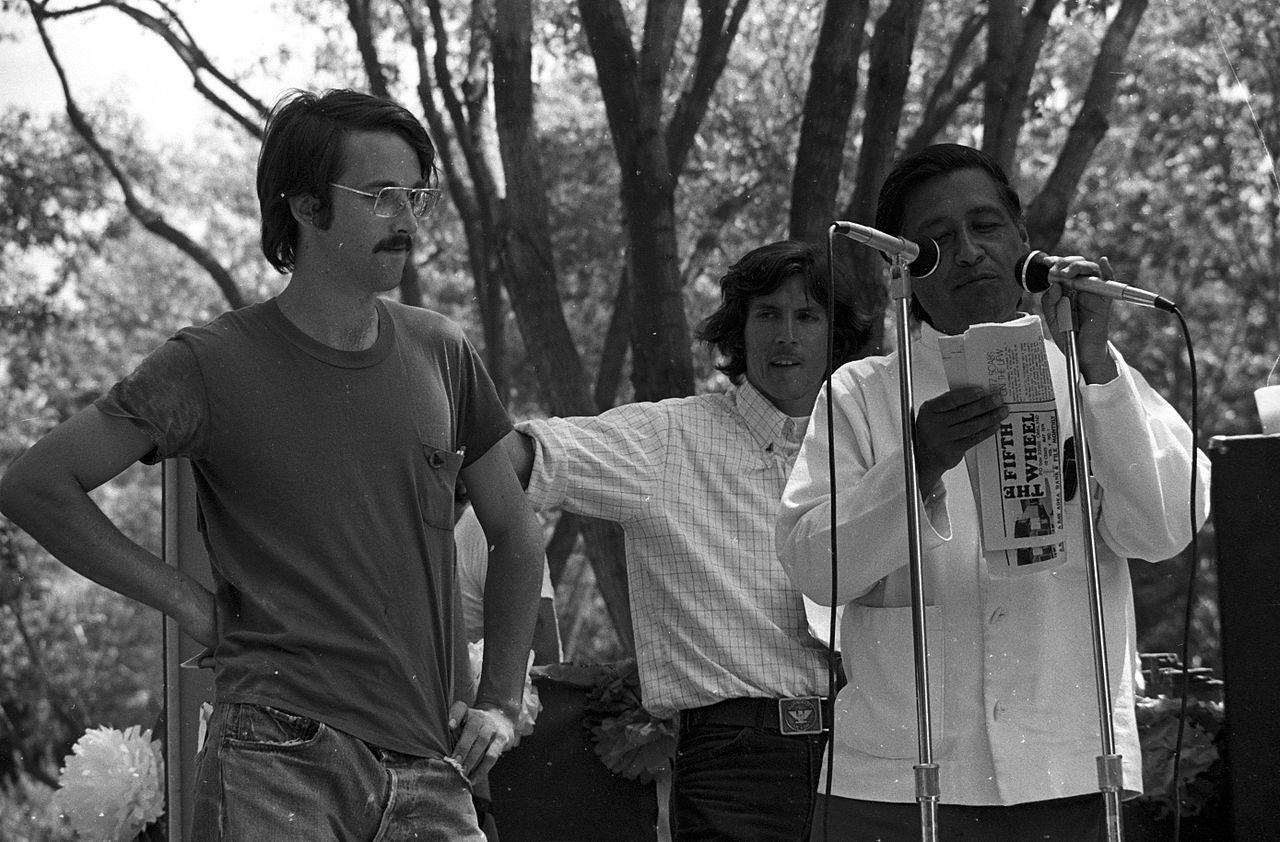
This year, Hispanic Heritage Month coincides with the 50th anniversary of the beginning of the Delano Grape Strike, and provides us with an opportunity to pay tribute to two great labor leaders who co-founded the National Farm Workers Association (NFWA) and helped to organize one of the most successful strikes in labor history—Cesar Chavez and Dolores Huerta.
On September 8, 1965, Filipino farm workers in Delano, Calif., who were members of the Agricultural Workers Organizing Committee (AWOC), walked off the job at table grape farms in the area to protest the low pay and poor working conditions. The leaders of AWOC knew that a successful strike had to include the many Latino farm workers in Delano, and they reached out to Chavez, Huerta and the NFWA to join them in their fight for dignity and respect on the job. Chavez insisted that the Filipino and Latino strikers work together and take a vow to remain nonviolent, and expanded the goals of the strikers to include the right to unionize and engage in collective bargaining. Realizing their common goals, the NFWA and AWOC merged to form the United Farm Workers Organizing Committee in 1966.
In 1966, Chavez led a strike of California grape workers on a 300 mile march from Delano to Sacramento to raise awareness for their cause. Soon, the strike spread to thousands of workers and the movement gained national attention and support from around the country, including the support of Robert F. Kennedy. In 1967, Chavez shifted his focus and urged consumers and supermarket chains to boycott table grapes. In response to the plight of the farm workers, Americans throughout the country refrained from buying table grapes in a show of support. After five years of nonviolent strikes, boycotts, marches and fasts, the United Farm Workers Organizing Committee succeeded in reaching a collective bargaining agreement with table grape growers in California in 1970—resulting in better pay, benefits and workplace conditions for thousands of farm workers.
In 1972, the United Farm Workers Organizing Committee was accepted into the AFL-CIO and changed its name to the United Farmworkers Union. A year later in 1973, Chavez and Huerta led another successful consumer boycott against California grape growers that resulted in the California Agricultural Labor Relations Act of 1975, which allowed farm workers to form unions and bargain for better wages and working conditions.
]]>Celebrating Hispanic Heritage Month: Local 770 Member Lydia Flores Fighting for Justice at El Super
https://www.ufcw.org/celebrating-hispanic-heritage-month-local-770-member-lydia-flores-fighting-for-justice-at-el-super/
Thu, 01 Oct 2015 13:16:18 +0000http://www.ufcw.org/?p=20560Originally posted by the AFL-CIO On Oct. 7, the White House is holding a summit with leaders in the various movements to improve the lives of working people across the country, with a focus on how to make sure that economic growth is broad-based and that workers share in the benefits they help create with their labor. […]
On Oct. 7, the White House is holding a summit with leaders in the various movements to improve the lives of working people across the country, with a focus on how to make sure that economic growth is broad-based and that workers share in the benefits they help create with their labor. Until the summit begins, we’ll be highlighting the stories of workers and their struggles to make sure their voices are heard on the job.
Today, we take a look at Lydia Flores.
Flores is a 37-year-old single mother of three who works as a cashier at union El Super market in Arleta, Calif. She and her co-workers have been fighting for a new contract for more than two years in the face of a campaign by the company to undermine the workers’ desires for fair working conditions and a voice on the job.
Currently, she makes $12.88 per hour after 11 years at the company. The low wages and the lack of sufficient hours keep Flores in a constant struggle to pay her bills:
I pay the mortgage and my car and my utilities—and the rest of the bills have to wait. Sometimes I work 32, 36 hours. The 40 hours are not guaranteed.
When Flores speaks up about anything at work, she says that she is met with hostility and disdain. Other workers at El Super have made similar complaints.
Flores says the workers want more:
We want more respect and enough hours to support our families. If we had a contract, they would respect the 40 hours, and we would not have to be fearful about raising concerns about the company’s failure to follow the rules
Flores knows that coming together with her co-workers can make positive change. She is a member of the United Food and Commercial Workers (UFCW) Local 770, a shop steward and a member of the union’s bargaining committee.
El Super employs low‐wage and predominantly Latino workers. The workers at the union stores were covered under a contract with El Super that expired on Sept. 27, 2013. For more than a year, the unions and the worker bargaining team sought to bargain to improve their working conditions. In September 2013, El Super imposed what it called its “last, best and final” offer, which did not address the workers’ concerns and provided for less paid sick leave than is currently mandated by California state law. On Dec. 12, 2014, El Super workers voted resoundingly to recertify the union and demanded the company return to the bargaining table, a request which El Super rejected. El Super employees and the UFCW launched a boycott in December 2014 to protest the company’s actions. The union’s boycott lines have turned away more than 100,000 prospective El Super shoppers. In the face of the boycott and after the NLRB issued complaint and sought a 10(j) injunction in federal court regarding the company’s unlawful refusal to bargain, the company agreed to return to the table. El Super recently agreed to bargain for the first time in more than a year.
Flores and her fellow workers aren’t making outrageous demands, especially in light of the fact they are owned by a billion-dollar business:
“What we’re trying to do with our consumer boycott of El Super is trying to get something better for our families. We just want the company to hear us, we want them to come and negotiate and give us what is fair. We’re asking for better wages, regular schedules and hours to support our families and respect, that’s what we want.”
About El Super
El Super is managed by the Paramount, Calif.-based Bodega Latina Corp. There are 50 El Super locations in Southern California, Arizona and Nevada. Bodega Latina Corp. is 81.4% owned by Mexico-based Grupo Commercial Chedraui (Chedraui). Chedraui operates 211 markets in Mexico. It is Mexico’s third-largest retailer.
In January 2013, Forbes estimated the personal wealth of Chedraui’s chairman of the board, Alfredo Chedraui Obeso, at more than $1 billion. That year the company made $5.1 billion in revenue. The El Super stores make up more than 20% of Grupo Chedraui’s income.
]]>11 Important Facts About Latinos in the U.S. Workforce to Keep in Mind During Hispanic Heritage Month
https://www.ufcw.org/11-important-facts-about-latinos-in-the-u-s-workforce-to-keep-in-mind-during-hispanic-heritage-month/
Tue, 29 Sep 2015 14:30:21 +0000http://www.ufcw.org/?p=20550Originally posted by AFL-CIO In a new report released this week, Latino Workers and Unions: A Strategic Partnership for America’s Progress, the Labor Council for Latin American Advancement details the work environment for Latinos in the U.S. workforce. The picture the report paints isn’t a pretty one. Here are 11 important facts about Latino workers […]
In a new report released this week, Latino Workers and Unions: A Strategic Partnership for America’s Progress, the Labor Council for Latin American Advancement details the work environment for Latinos in the U.S. workforce. The picture the report paints isn’t a pretty one. Here are 11 important facts about Latino workers in the United States:
1. The Latino population is the fastest growing group in the United States, currently at more than 55.4 million (17% of the overall population).
2. More than 26 million Latinos represent about 15% of the workforce, a number expected to nearly double by 2050.
3. In 2013, nearly one in four Latino families lived below the poverty line, nearly twice the national poverty rate.
4. Nearly one-fourth of Latinos work in low-wage jobs.
5. In 2014, the Latino unemployment rate was 6.7%, above the national rate of 5.5%.
6. In 2014, the average nonunion Latino made just $547 a week.
7. More than two-thirds of Latinos lack retirement accounts, and more than 80% of Latino households have less than $10,000 in retirement savings.
8. Nearly 30% of Latinos lack health insurance.
9. More than three-fourths of Latino workers work in jobs where they face minimum wage or overtime pay violations.
10. In 2013, nearly 800 Latinos died at U.S. workplaces, the highest total since 2008.
11. Latinas on the job earn only 56% of what a white man earns and more than 75% of Latinas in the southern part of the United States report sexual assault being an issue in the workplace.
The report says that the key way for Latinos to improve this situation is through unions, a partnership that will yield many benefits for unions, too. The report concludes:
Although the current outlook for Latinos is uncertain, their potential for growth is impressive. Wielding over $1.5 trillion in purchasing power, making huge gains in the workforce and electorate, it’s no surprise that the future for Latinos can be drastically different and positive. But in order to realize this potential, Latinos must harness their strengths and exert their voice in the workplace.
Gaining access to a union will be an essential step for Latino workers and their families. Through union representation, Latinos can achieve higher wages that will help them fight poverty and gain access to health and retirement benefits.