The post UFCW Local 770 Overhill Farms Workers Improve Workplace Safety Protocols appeared first on The United Food & Commercial Workers International Union.
]]>Members of UFCW Local 770 who work at Overhill Farms in Vernon, Calif., are leading the effort to make their workplace safer during this pandemic.
Members at the two food processing plants formed a COVID-19 Safety Committee to address and find solutions to workplace safety concerns about protecting workers from contracting the coronavirus. The committee was formed in July, and the 200 members now have gained the authority to implement safety and health precautions, including stopping the line during a shift if they see safety and health violations.
The COVID-19 Safety Committee members will ensure that everyone entering the two Overhill Farms food processing plants follow health and safety measures, such as social distancing throughout the worksite, including in the parking lot, restrooms, at the time clock, walking to their lines and even at their workstation. They will also monitor compliance regarding hand washing and appropriate personal protective equipment.
“We’ve won improved protocols and we have established a reporting process to make sure that everyone in the plant is safe. The COVID-19 committee gives us the authority to refuse to start the lines until all the health and safety measures are in place,” said Gloria Lopez, a weight checker at Plant 1.
“We must ensure that our members at Overhill Farms are healthy and the company abides by all public health measures,” said UFCW 770 Packinghouse Division Union Representative Armando Espinoza. “Food processing workers know the operations of their plants. They know how to make them safe. With health and safety committees based at their workplaces, essential workers can ensure that their voice and knowledge are part of the safety protocol. This committee will help protect the workers and local communities.”
Overhill Farms employees produce frozen food items such as plated meals, soups, pastas, sauces and other specialties. These workers ratified a strong contract in 2019 and the COVID-19 committee is a separate extension of that agreement in the contract. Overhill Farms is owned by CPF, a Thailand based conglomerate.
The post UFCW Local 770 Overhill Farms Workers Improve Workplace Safety Protocols appeared first on The United Food & Commercial Workers International Union.
]]>The post UFCW and Over 100 Health Experts Call for Mask Mandates Nationwide appeared first on The United Food & Commercial Workers International Union.
]]>In a full-page advertisement in The New York Times on Sunday, July 12, the UFCW and a coalition of health experts called on governors, members of Congress, and the Trump Administration for immediate action to make masks mandatory in public in all 50 states. A new report shows the majority of governors have failed to enact public mask mandates as infections pass 3 million and both shoppers and frontline workers continue to be at risk.
“As COVID-19 spikes across the country continue to put America’s frontline workers at risk, it is time for governors, members of Congress, and the Trump Administration to step up and make public mask mandates the law in all 50 states,” said UFCW International President Marc Perrone in a statement.
“In every grocery store in America, frontline workers are continuing to put themselves in harm’s way to make sure our families have the food we need. Without immediate action, these brave workers will continue to get sick and die. The science is clear – masks are the most powerful tool we have to stop the spread of COVID-19 and keep both workers and shoppers safe. With governors in the majority of states refusing to make masks mandatory, millions of Americans are needlessly being put in danger every day. It’s time for elected leaders to pull their heads out of the sand and make masks mandatory in all 50 states to protect these brave workers and the millions of families they serve.”
In addition to the UFCW, the open letter in the full-page advertisement to elected leaders is signed by over 100 health experts from the World Economic Forum; MIT; Harvard; Stanford; Yale; the National Academy of Sciences; and many other leading organizations.
“Research suggests that over 200,000 American COVID-19 cases have already been averted thanks to the mask requirements covering much of the U.S., and it is estimated that requirements in the rest of the country could add over $1 trillion dollars to the U.S. GDP,” said Jeremy Howard, a distinguished research scientist at the University of San Francisco who was a co-organizing signatory to the letter.
The New York Times advertisement can be viewed here.
The post UFCW and Over 100 Health Experts Call for Mask Mandates Nationwide appeared first on The United Food & Commercial Workers International Union.
]]>The post While some employers roll back “hero pay,” new UFCW agreement with Cargill makes it permanent appeared first on The United Food & Commercial Workers International Union.
]]>The UFCW negotiated a $2 per hour temporary raise for Cargill workers from March 23 to May 5 as part of our effort to increase pay and other benefits for frontline workers during the COVID-19 coronavirus outbreak, and the new contract makes the $2/hour increase permanent through the rest of the 5-year agreement. In addition to the permanent $2 per hour raise, the workers will also receive a $6 per hour temporary raise in response to the ongoing health crisis through August 31, 2020, and short term disability benefits will be significantly strengthened.
The agreement with Cargill stands in a sharp contrast to how employers such as Kroger, who recently ended their so called “hero pay” despite the objections of the UFCW and concerned shoppers, have handled hazard pay and benefits for their employees.
The UFCW has been pushing for better standards for food workers since the beginning of this crisis. With Cargill as the third largest meat producer in the United States, the UFCW hopes the victory will help pave the way for raising standards in the entire industry.
“The $2 permanent wage increase and enhanced benefits represent a significant breakthrough for our members at Cargill,” said International Vice President and Food Processing, Packing and Manufacturing Division Director Mark Lauritsen. “Our union will push other meatpacking and food processing employers to follow Cargill’s lead with the goal of raising standards for all workers in this industry.”
Work in these plants is never easy, and at a time of so much turmoil, it is welcome to have a bit of good news that the hard work and sacrifice of these men and women will be recognized. There is no price on someone’s safety, but these increases help define essential workers as valued and important to our communities rather than disposable, and we hope that more employers, in not only meat packing but in all essential industries, will recognize this and follow suit.
The post While some employers roll back “hero pay,” new UFCW agreement with Cargill makes it permanent appeared first on The United Food & Commercial Workers International Union.
]]>The post UFCW Calls on Top Supermarket Companies to Reinstate Hazard Pay appeared first on The United Food & Commercial Workers International Union.
]]>On May 20, the UFCW hosted a national press call with leading reporters from across the country to address the fact that many of America’s largest supermarket and food retail companies – including Kroger, Walmart and Amazon – have recently ended so-called “hazard or hero pay” even as the pandemic continues across the country.
During the call, UFCW International President Marc Perrone called on these companies to immediately reinstate this essential pay until the need to wear masks and other protective measures are no longer necessary.
As a measure of the real and growing risk of the public health crisis facing grocery workers, the UFCW also released new internal numbers that show at least 68 grocery workers have died and more than 10,000 have been infected by or exposed to the new coronavirus. During the call, the UFCW called on every leading food retailer to release the number of their food retail and supermarket workers who have died or become sick and/or exposed to COVID-19.
“As this pandemic continues, the threat of this virus is real across every grocery store in America,” said UFCW International President Marc Perrone. “Yet, most states and supermarket chains are still failing to enforce social distancing or mask wearing in stores to keep customers and workers safe. Even worse, Walmart, Whole Foods, Trader Joe’s and Kroger have failed to release internal numbers on worker deaths, infections, and exposure. Amazon even fired workers brave enough to speak out.”
“Amazon, Whole Foods, Kroger and other companies have shamefully announced pay cuts for millions of these workers on the frontlines, even as each company experiences record sales,” added Perrone. “When workers face higher risks, they should be paid more. These workers are not facing fewer hazards and are still putting themselves in harm’s way, interacting with thousands of customers a day to help ensure our families have the food we need. While we hope some of these companies do change and follow the lead of other national companies like Albertsons and Ahold who acted responsibly to extend this hazard pay, we are preparing options to ensure that every American knows which supermarket companies stood by their workers and their families and which did not. American consumers and workers deserve better and we will continue to stand with them.”
As part of the call, Kroger grocery workers from across the country spoke about the serious risks they face, and how Kroger eliminating its ‘hero pay’ has had a damaging effect on them and their coworkers.
“Five people in my household work for Kroger and together, we put in about 250 hours per week,” said a Ralphs (Kroger banner) grocery worker in San Diego, Calif. “When Kroger gave us ‘hero pay,’ it felt like we mattered and they were recognizing the risks we are taking. Every day, you fear that you might catch the virus at work. You fear that you might take the virus home to your family. I’ve had customers swear at me when we ask them to wear a mask. One customer even told me I might be dead in a month. After work each day, I want to cry, but I don’t have the tears to cry because it’s not going to make things better. We are working longer hours under stressful conditions. At my store, they take daily temperature scans, but the thermometers the company provides us don’t work. Kroger and all grocery companies need to provide the protective equipment, testing, and essential pay that all of us need so that we can keep our stores operating safely. Our lives are on the line.”
“There is a lot of fear in my store because of the virus,” said a Kroger meat department worker in Lansing, Mich. “Every day, we prepare like we’re going into battle with the virus. We are exposed to thousands of people every day for hours and the reality is it only takes one person to expose an entire store. Kroger ended our ‘hero pay,’ but the crisis is not over. I face each day with anxiety and it gets worse when I see customers refuse to wear masks. I am a mother and my children need me to stay healthy.”
You can access the full video recording of the press conference here.
The post UFCW Calls on Top Supermarket Companies to Reinstate Hazard Pay appeared first on The United Food & Commercial Workers International Union.
]]>The post UFCW Local 304A member speaks about life as a packinghouse worker during COVID-19 on “The Daily” podcast appeared first on The United Food & Commercial Workers International Union.
]]>When UFCW Local 304A member Achut Deng started her job at Smithfield in Sioux Falls, South Dakota, she was happy to find work that would allow her to build a better life for her three boys than the one she’d had growing up in refugee camps in Africa. Work at the plant is hard, but pays well and offers benefits that have allowed her to support not only herself and her children, but her family back home in Sudan. Every day, she goes to work and takes pride in helping make sure the bacon, ham, hot dogs, and other pork processed at the facility are safe and ready to feed families around the world. But when the coronavirus hit, Deng unexpectedly found herself at the center of the pandemic. Caitlin Dickerson of The New York Times spoke with Deng about her story.
When Deng was a child, there was a terrorist attack on her home in south Sudan. As an orphan, she fled the country and grew up in refugee camps in Ethiopia and Kenya. She often went days without any food or fresh water, and many of her friends died. She didn’t know if she was ever going to leave, and learned to take life one day at a time. “I would say it was just surviving because you don’t know what is going to happen tomorrow, you know?” said Deng.
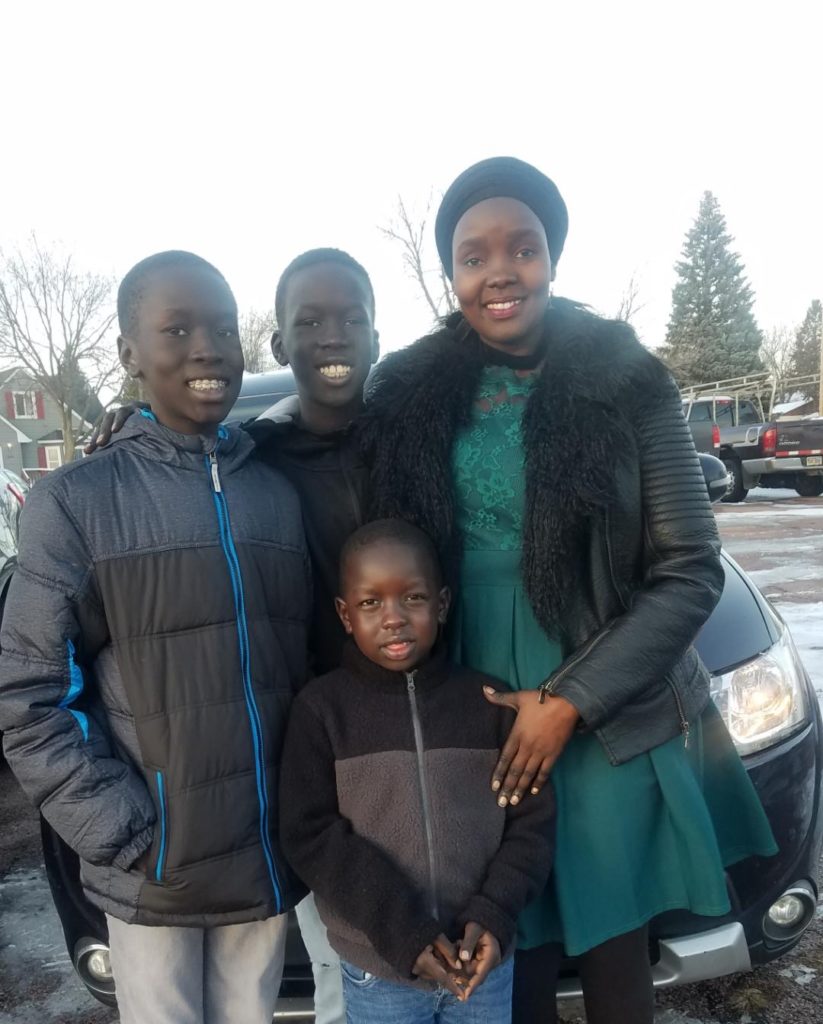
In 2000, Deng was chosen for a program that relocated Sudanese orphans to the United States. When she got the news she would be leaving for America, she was so happy couldn’t sleep. She moved to Kansas City and started a new chapter in her life. She graduated high school, then went on to community college. After school, she started waitressing before working private security in her early 20s.
She ended up moving to Sioux Falls, South Dakota for the same reason many young people move- to pursue a relationship. “I always tell people I moved to Sioux Falls for a pretty stupid reason,” she laughs. “I was thinking I would find a man. So that was pretty much the reason right there. I moved in with my younger son’s father, then we broke up. “
With so many people dependent on her as breadwinner, Deng had told her ex she would need a job as soon as she moved out, and he told her about the job at Smithfield. Work there was hard, but paid well. “A lot of people came to Sioux Falls because of Smithfield and what it was offering people. I know a lot of Sudanese families came here because of Smithfield.”
Deng put in her application and started right away as a Whizard knife operator trimming the fat from the loin as it zooms past. More than 10,000 pigs are processed there a day, and production at her plant alone accounts for 4-5% of all pork that is processed in the United States.
“When I started? Hard work. Hard work is what I thought of it, but you’re not really thinking of how hard it is, you are thinking of money and everything. Once you get the paycheck, you are able to pay for the apartment. You are able to put food on the table. These are the things that I was thinking.”
“Once you start doing something for the first time, something that you’ve never done, your muscles are going to reject it. Your body is going to reject it. So I was always sore.”
Deng has held a number of jobs in the plant over the years. She became a shift lead and works about 11-12 hours days six days a week. With the overtime and her higher pay, she was even able to take her children to Disney World last year.
“My boys, all three of them, it means I can give them what I never had. Which is a better life at a young age. When I went there, I cried, but it was tears of happiness. I am American by papers. I can bring my kids here. And that was something I did. I was so proud of myself. “
Deng’s also uses her salary to support five family members who are still in Africa. “So this job, it allows me to take care of everybody else, not just my boys. So that’s why I pick up overtime, regardless of me being tired. Every morning when I go to work, I put everything that the company offered me in order to go to work this food that I’m making doesn’t have anything that can go and harm someone. Because this food is going to families. It’s going to children. It’s going to mothers. It’s going to fathers. Uncles. Aunts. Everyone around the world. Working at the meat factory, I’m making food for people around the world. I think of that every day. “
When she and her coworkers first heard about COVID-19, thought it was just something that was going to stay in China. Then as the virus spread to the United States, it was difficult to tell how big of a threat it would be. “Most of us as immigrants and refugees, it’s like, well, maybe people are just being extra about it, you know? Maybe it’s not that bad. For me personally, I’ve been through so much. If this is just like a virus, you’re talking to someone who had malaria, you know? I survived that. So it was like, if it’s going to be like malaria, I can go through it. It’s just going to be like any other thing that I’ve been through. “
But then things changed. Cleaning was stepped up in the plant, but with 150-160 people on each shift and many of them working side by side, Deng and her coworkers started to grow nervous.
Then on Saturday, March 28th, her supervisor pulled her aside and asked if she had any fever or cough. One of the machine operators she had worked with that morning had tested positive, and Deng was sent home to quarantine for two weeks. “I didn’t say it out loud, but I’m thinking, ‘they are being silly.’”
“Monday night I went to bed feeling ok. I woke up about 2am with this sharp pain in my body that just feels like someone has stabbed me. So I went to the bathroom and said, maybe if I take a shower, it will be better. But when the water hit my body, it felt like a bunch of rocks were being thrown at my body.”
Her skin hurt, and by Thursday night her body was so exhausted, even walking was difficult and it felt like something heavy was sitting on her chest. The fear kicked in as she started having trouble breathing, and she refused to fall sleep because she was afraid of not waking up. The experiences from her childhood flooded back, along with the fear that her children would face the same ordeals she went through being an orphan and not having parents to support them. “If I die, my kids will go through the same thing I’ve been through. The loneliness. I’m thinking, I bring these kids to this world. I’ve been through everything I’ve been through and I never had a chance to tell them. They don’t know their mom. They don’t know what their mom went through. All they know is their mom is a work-a-holic, “she would do anything to give us a better life,” that’s all they know. It’s not a perfect world. I make it perfect for them. But if I die, this world is not perfect anymore.”
As more workers got sick, the situation in Sioux Falls started to get nation attention. The number of positive cases kept rising up to more than 800 workers, and the governor called on head of Smithfield to stop production. On April 12th, Smithfield announced indefinite closure, while more and more plants around the country found themselves facing similarly dire circumstances.
An estimated 22 meatpacking plants have closed – including union and non-union plants – at some point in the past two months. These closures have resulted in over 35,000 workers impacted and a 25 percent reduction in pork slaughter capacity as well as a 10 percent reduction in beef slaughter capacity.
Because of the importance of these workers to our national food supply, President Trump issued an executive order compelling these plants to stay open. But UFCW International President Marc Perrone called on the White House not to treat these workers as sacrificial lambs. “To protect America’s food supply, America’s meatpacking workers must be protected,” said Perrone. “The reality is that these workers are putting their lives on the line every day to keep our country fed during this deadly outbreak”
The UFCW is urging the Administration to immediately enact clear and enforceable safety standards that compel all meatpacking companies to provide the highest level of protective equipment through access to the federal stockpile of PPE, ensure daily testing is available for workers and their communities, enforce physical distancing at all plants, and provide full paid sick leave for any workers who are infected. Additionally, to protect the food supply and ensure these safety standards for workers are enforced, these plants must be constantly monitored by federal inspectors and workers must have access to representation to ensure their rights are not violated.
On Monday, the Sioux Falls plant began to partially reopen with about 250 employees. Deng is still recovering, but cannot afford to stay home for a long time. “My focus is to try to take care of myself so that when the company opens back up, then I’m ready to go. So that’s where my focus is.”
“Thank you very much for at least giving me the voice. A lot of people don’t understand, but living in the refugee camp, I don’t take anything for granted. Because of what I’ve been through and because of what I see happening to other kids that did not make it. But I am pretty sure they are looking over me and watching over me and I’m going to make them proud. “
The post UFCW Local 304A member speaks about life as a packinghouse worker during COVID-19 on “The Daily” podcast appeared first on The United Food & Commercial Workers International Union.
]]>The post UFCW Local 354 chemical workers respond to COVID-19 by making hand sanitizer, disinfectant for hospitals appeared first on The United Food & Commercial Workers International Union.
]]>Members of UFCW Local 354 who work at GEO Specialty Chemicals in Cedartown, Ga., in partnership with another local company, recently manufactured thousands of bottles of hand sanitizer and disinfectant in response to the recent coronavirus outbreak. The members are employed as engineering and process technicians.
The GEO Specialty Chemicals Cedartown facility, which manufactures and supplies chemicals worldwide, was recently approached by the local economic development council and industrial development board about the company’s capability of manufacturing hand sanitizer and disinfectant using an approved World Health Organization formula. In partnership with another local company, Meggitt Polymers and Composites in Rockmart, members of UFCW Local 354 quickly and successfully identified on hand raw materials and converted an idle process reactor in the facility to produce enough sanitizer and disinfectant for 2,500 bottles or over 8,000 pounds of hand sanitizer and disinfectant. The bottles will be distributed to local hospitals and other organizations in the area where there is the greatest need.
“We consider our members to be our greatest asset, and the reason for our long history of success at GEO Specialty Chemicals,” said UFCW Local 354 President Jason Stroup. “This is just an extension of our willingness to work together to show what we are capable of when challenged with a project.”
“This is a small, rural and tight knit community of which I am proud to be a part,” Stroup added. “Currently, it is incumbent upon all people of all walks of life to give of themselves during this time of national crisis to help our neighbors, our communities, and our country and put away our differences. I can speak for everyone at GEO and Local 354 when I say it is the least we can do and what we have done here at GEO for the past 83 years.”
The post UFCW Local 354 chemical workers respond to COVID-19 by making hand sanitizer, disinfectant for hospitals appeared first on The United Food & Commercial Workers International Union.
]]>The post UFCW calls on USDA and White House to protect meatpacking workers and America’s food supply appeared first on The United Food & Commercial Workers International Union.
]]>In the letters to USDA Secretary Perdue and Vice President Pence, the UFCW outlined five immediate steps to protect meatpacking and food processing workers as follows:
- Prioritize Essential Workers for Testing: In order to ensure the health and safety of workers and protect the food supply, essential workers, such as those in meatpacking and food processing, must be prioritized for testing.
- Immediate Access to PPE: Though social and physical distancing are essential to preventing the spread of COVID-19, workers still need access to PPE, such as masks and gloves. The reality is that many of our members lack the critical personal protection equipment necessary to do their job and reduce the risk of exposure. It is essential that the USDA, in conjunction with the White House Task force, prioritize all meatpacking and food workers for PPE to ensure the health and safety of these workers and to protect our food supply.
- Immediate Halt On Line Speed Waivers: In the first two weeks of this month, the USDA’s Food and Safety Inspection Service approved 11 regulatory waivers for poultry plants to increase their maximum line speed. Rather than protect our food supply and workers, these waivers guarantee that workers are more crowded along a meatpacking line and more workers are put at risk of either catching or spreading the virus. It is critical that the USDA immediately cease granting any new waivers and suspend all existing waivers that allow plants to operate at faster speeds.
- Mandate Social Distancing Where Possible: In order to responsibly protect workers and prevent spread of the disease, companies must enforce and practice six-foot social and physical distancing to the greatest extent possible, even if this means production slows down. Where distancing is not possible, companies should use plexiglass barriers to separate and protect workers, and/or ensure that all workers are provided with masks that can safely be used under these extreme conditions.
- Isolate Workers Who Show Symptoms or Test Positive for COVID-19: In light of the largest outbreak to date at Smithfield Foods in Sioux Falls, South Dakota, it is critical to identify and isolate workers who have tested positive or who exhibit symptoms of COVID-19. These workers should be allowed to quarantine at home, with pay, per the recommendations set by the Centers for Disease Control and Prevention.
In a press conference call last week, the UFCW released updates on the serious and deadly impact of the COVID-19 virus. Based on the most recent UFCW internal estimates, 20 meatpacking and food processing workers have died. In addition, at least 5,000 meatpacking workers and 1,500 food processing workers have been directly impacted by the virus. The estimates of those meatpacking and processing workers directly impacted includes individuals who have tested positive for COVID-19, missed work due to self-quarantine, are awaiting test results, or have been hospitalized and/or are symptomatic.
New estimates also show that 22 plants, both union and nonunion, have closed at some point in the past two months. These closures have impacted over 35,000 workers and reduced pork slaughter capacity by 25 percent and beef slaughter capacity by 10 percent.
During the conference call, the threat to America’s meatpacking workforce was highlighted in very personal terms by five workers who discussed the significant risks they and their coworkers are facing every day in some of the nation’s largest meatpacking facilities. Among the specific risks highlighted by these workers was the challenge posed by a lack of PPE, as well as increased line speeds which make social distancing all but impossible.
“America’s food processing and meatpacking workers are in extreme danger, and our nation’s food supply faces a direct threat from the coronavirus outbreak. If workers in these plants are as essential as our elected leaders say, then it’s about time that our elected leaders provide them with the essential protections they need. Make no mistake, without national safety standards to protect these workers from the coronavirus– more lives will be lost, more workers will be exposed, and our food supply will face jeopardy,” said UFCW International President Marc Perrone.
“Across this country, we are seeing the impact when the government fails to take steps to protect these essential workers. It needs to both provide testing and protective equipment and issue clear and direct safety guidelines that companies can and must enforce. This is not just about whether we will have enough beef, chicken, and pork to feed our families. It is – for these workers – a matter of life and death,” Perrone added.
You can read the USDA letter here and the letter to Vice President Pence here.
The post UFCW calls on USDA and White House to protect meatpacking workers and America’s food supply appeared first on The United Food & Commercial Workers International Union.
]]>The post New coronavirus report reveals 72 deaths, 5,000 directly impacted among UFCW membership appeared first on The United Food & Commercial Workers International Union.
]]>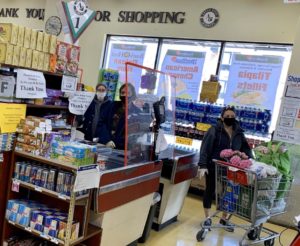
UFCW Local 338 members at A&J Foodtown in Bellerose took two minutes of reflection this Workers Memorial Day to honor those lost serving their community during the COVID-19 crisis throughout the country.
According to the UFCW’s internal reports, there have been at least 72 worker deaths and 5,322 workers directly impacted among the UFCW’s 1.3 million members who work in grocery, retail, pharmacy, meatpacking, and other essential industries.
Those directly impacted include workers who tested positive for COVID-19, missed work due to self-quarantine, are awaiting test results, or have been hospitalized, and/or are symptomatic.
“These workers never signed up to be first responders in an emergency, but that is exactly what they are now and they need protections immediately before more lives are needlessly lost,” said UFCW International President Marc Perrone. “The human cost to America’s food, retail, and commercial workers is real and growing.”
“As we remember all of America’s brave frontline workers, across every industry, who have died from COVID-19, we are calling on all of our country’s leaders in the White House, in Congress, and states across the country to strengthen safety standards and take immediate action to protect the millions of workers who are keeping our communities strong throughout the crisis.”
The post New coronavirus report reveals 72 deaths, 5,000 directly impacted among UFCW membership appeared first on The United Food & Commercial Workers International Union.
]]>The post Everything You Need to Know About Masks appeared first on The United Food & Commercial Workers International Union.
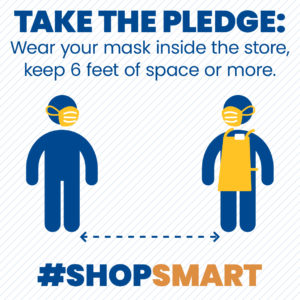
]]>Masks, both medical-grade and home-made, can be a powerful tool for protecting yourself and those around you during COVID-19, but the truth is masks only work if we ALL wear them. That’s why the UFCW is calling on employers to provide masks to workers that comply with CDC guidelines and asking all customers to not shop without one.
 Why should I wear a mask?
When people talk, laugh, cough, sneeze, or even just breath, tiny droplets of water are released into the air, which can carry the virus. If you cough or sneeze into a homemade cloth mask, the fabric is going to capture at least some of the virus-carrying droplets before they become airborne.
That’s why it is especially important to wear them in places like the grocery store or the pharmacy where hundreds or thousands of people are passing through each day. When you have that many people in one place, even an imperfect solution is going to help dramatically reduce the number of germs circulating and reduce the chances of someone getting sick. Because masks do not always prevent you from breathing in the virus, it is critical to emphasize that maintaining 6-feet social distancing remains important to slowing the spread.
What are the best materials to use when making a mask?
The tighter the weave on fabric, the more it restricts the flow of air, which is good for blocking droplets, but can make it more difficult to breath. According to a study by Cambridge University researchers, several suitable fabrics can be used to make face masks at home.
If you are using materials you have around the house, cotton (from either an old t-shirt or a bandana), is a good choice but requires layering – preferably 2-4 times. If you have other materials such as quilter’s fabric, flannel, or bedsheets with a high thread count, these materials are even more effective at blocking particles.
 Layering and Breathability
When layering your materials, you want to make sure the mask is still breathable while providing good filtration. When testing your mask, you’ll want to make sure you can breathe comfortably through your nose – through the material and not just in and out the sides.
To make sure the fabric isn’t too porous, the Wake Forest research team suggests holding the layered fabric up to a light to see how much shines through. If you can see a bright light clearly, you’ll need to choose a different fabric.
Creating Your Mask
The CDC has posted multiple patterns for creating your own mask at home. Don’t know how to sew? Don’t worry! They’ve got you covered too. No mask pattern has been proven more effective than the other – as long as you make sure it covers your nose, is secure on either side of your face, and fits under your chin.
Removing Your Face Mask
Be careful not to touch your eyes, nose, and mouth when removing your mask. Be sure to wash hands immediately after removing – as well as before you put it on.
Washing Your Face Mask
Face masks should be washed regularly and after each use. Just your standard washing machine and detergent should suffice in properly washing your new creation. If that is not accessible, hot water and soap work just fine as well!
The post Everything You Need to Know About Masks appeared first on The United Food & Commercial Workers International Union.
]]>The post What you need to know before going to the grocery store appeared first on The United Food & Commercial Workers International Union.
]]>Before You Go
Plan your trips carefully
Despite the CDC’s recommendations, grocery workers across the country have been reporting some customers are still making routine daily trips to the grocery store. While under normal circumstances workers are happy to see familiar faces every day, it is not safe right now because of coronavirus.
Make fewer trips to the store by practicing meal planning and balancing fresh produce and other perishable items with frozen, dried, or canned goods. Bring a list with you.
If you still find yourself making frequent trips for small items, try to coordinate with friends or neighbors and take turns making shopping trips. Just be sure to use good social distancing practices when exchanging groceries.
Check store policies
Look online for what your store is doing to protect both customers and workers. Many stores now close early to sanitize or offer dedicated shopping hours to senior customers and other at-risk groups. Some stores have installed sneeze-guards at the checkouts and put colored tape on floors to help customers keep their distance while in the checkout lane. If you find your store hasn’t taken any precautions, call and ask to speak with the manager and let them know safety is a priority for you and they need to do better.
Wash your hands
Yes, you need to wash your hands when you get back to the store, but washing your hands before you leave also can cut down on you inadvertently spreading germs to others.
Go solo
We know your family is going stir-crazy, but a trip to the grocery store right now should be treated as a serious occasion and a necessity, not a social outing. If you are able to, have one person in the family go shopping and while others stay at home.
At the store
Bring your own hand sanitizer and wipes, if you have them
While the UFCW has been working with many union grocery employers to make sure they provide hand sanitizer and wipes, recognize that this is a challenging time for everyone. It’s best to bring your own if you can just in case they are out. Use the wipes to wipe down the shopping cart.
But don’t panic if you don’t have any wipes. “The risk of becoming infected from touching any individual shopping cart is probably very, very low,” said Dr. Daniel Winetsky, infectious diseases fellow at Columbia University Irving Medical Center, in a recent article in The New York Times. “So if wipes are not available, there is no need to abandon your grocery shopping needs. Just try not to touch your face while shopping, and wash your hands or use hand sanitizer after you are done.”
If you use gloves, use them properly
Gloves, when used properly, can help you keep your hands clean, but it is important to remember that if you touch your face while wearing gloves or touch anything else you are shopping for, an unwashed glove and an unwashed hand both carry the same risk of cross contamination. So remember, don’t let the fact you are wearing gloves lure you into a false sense of security. You should still avoid touching whatever surfaces you can while you are shopping.
Put used gloves into the trash can
Used gloves should be discarded of immediately directly into the trash can, not thrown on the ground of the parking lot or shoved into a pocket. Making someone else clean up after you and exposing them to all the germs you could have picked up while shopping is not in the spirit of the #ShopSmart pledge, and isn’t being very thoughtful to the essential workers who already have enough to deal with.
Follow rules and posted guidelines
Remember to not only keep 6 feet away from other customers, but from workers, as well. If a grocery worker is stocking a shelf and you need an item near them, either let them continue doing their job and check back at the end of your trip, or politely let them know you would like to get an item near them.
Avoid cash transactions if you can
This includes not only paying for groceries, but purchasing lottery tickets or getting cash back from the register. Cash passes through a number of hands, both before and after it touches your wallet. It’s also safer for workers to avoid using cash if you can right now.
When You Get Home
Wash your hands and face
You probably know to wash your hands already, but it is a good idea to wash your face, as well. Sometimes, it is difficult to know whether you’ve touched your face or not while you were out because it’s often such a subconscious act. If you have sensitive skin, your normal facial soap is likely fine to use. Since we’re dealing with a virus, you don’t need soap that specifically says it’s “antibacterial” for it to work, it just needs to be able to get you clean.
Take your shoes off or disinfect them
Disinfecting the soles of your shoes can help keep from tracking any germs, not just COVID-19, around your house. This is especially important if you have kids who might spend more time rolling around on the floor than you do.
Disinfect what groceries you can
While there is no evidence the coronavirus is transmitted through food, there’s no harm in wiping down non-porous items such as bottles of juice or removing cereal from the outer box it comes in just in case. Wash produce with soap and water. Put all of the discarded packaging and soiled paper towels into a bag, then seal it up and throw it away.
When you are done, wipe down the surface the groceries were on. Put any bags into a clean back and seal them up. If you plan to reuse the bags around the house as trash bags like lots of thrifty households do, keep them sealed up and stored somewhere out of the way for at least a few days first.
Change your clothes and take a shower
Change your clothes when you get home from the grocery store and put them in the wash. Shopping right now is stressful. In addition to being cleaner and reducing the chance of any cross-contamination, you’ll also just feel better if you take a shower when you get home.
The post What you need to know before going to the grocery store appeared first on The United Food & Commercial Workers International Union.
]]>