The post USDA Announces First-Round Investments into U.S. Meat and Poultry Industry appeared first on The United Food & Commercial Workers International Union.
]]>The U.S. Department of Agriculture announced a set of first-round investments under their Meat and Poultry Processing Expansion Program. $73 million will be invested across 21 grant projects with the goal of increasing competition and expanding meat and poultry processing capacity in the United States.
“As America’s meatpacking and food processing union, UFCW applauds the Biden Administration and the Department of Agriculture for working to improve capacity and create a fairer, more diverse meat and poultry industry,” said UFCW International President Marc Perrone in a statement.
“The investments announced this week through the Meat and Poultry Processing Expansion Program are admirable, but they’re missing a crucial focus: workers.
“Any attempt to expand or improve this industry moving forward must include specific provisions for fair labor standards that protect workers and safeguards the hard-fought protections they’ve already won at unionized processing facilities around the country. The goal of expanding capacity and diversifying the amount of producers in the industry is naturally aligned with the needs of the workforce who will ultimately make these operations run.
“Let’s not leave those processing and agriculture workers behind and diligently build programs that prioritize their needs too.”
The post USDA Announces First-Round Investments into U.S. Meat and Poultry Industry appeared first on The United Food & Commercial Workers International Union.
]]>The post South Dakota Labor Leaders and Meatpacking Essential Workers Testified on South Dakota Safe Workplaces for Meat and Poultry Processing Workers Act appeared first on The United Food & Commercial Workers International Union.
]]>UFCW Local 304A Leadership and Meatpacking Members Testified and Urged State Legislatures to Put Worker Protections and Safety First
PIERRE, SD – Today,the United Food and Commercial Workers (UFCW) Local 304A, which represents 2,500 workers in South Dakota, leadership and meatpacking essential worker members testified before the South Dakota Senate Energy and Commerce Committee on the dire need to provide protections and workplace safety for meat and poultry processing workers.
The following are excerpts from prepared remarks UFCW Local 304A President BJ Motley delivered today before the South Dakota Senate Energy and Commerce Committee:
“As state legislators, you have the authority and responsibility to protect our state’s frontline workers who have bravely worked throughout this crisis to keep America’s food supply chain strong. We can no longer accept out-of-court federal agreements that allow meat and poultry processing companies to police their own workforce’s health and safety.
“That is why I urge you to support the South Dakota Safe Workplaces for Meat and Poultry Processing Workers Act. This proposal will hold meat and poultry processing companies accountable for the health and safety of their workforce and ensure America’s food supply chain remains strong.”
The following are excerpts from UFCW Local 304A essential meatpacking workers on their support for the South Dakota Safe Workplaces for Meat and Poultry Processing Workers Act:
- “From the beginning of the pandemic, it has been difficult to get Smithfield to recognize the threat COVID-19 posed to workers. Today that attitude is even worse, Smithfield has yet to establish any consistent cleaning and sanitation standards. Workers in this industry deserve consistent health and safety protections that hold employers accountable. This proposal does that and I urge you to support it,” said Kevin Kaul, distribution center worker at Smithfield in Sioux Falls and UFCW Local 304A member.
- “Today Smithfield operates the plant as if the pandemic is over and no longer acknowledges any personal responsibility to protect their workforce from getting COVID-19. This creates an environment that encourages workers to come into work sick. This proposal would require Smithfield to provide workers reasonable access to paid sick and safe time. It is time that we change the ‘work while sick’ culture in this country,” said Bobby Conner, lead man at Smithfield in Sioux Falls and UFCW Local 304A member.
- “The public is not aware of how difficult it is for workers to socially distance on the kill floor. Smithfield’s response of installing plastic shield barriers between workers becomes more of an impediment to meet current line speeds than it is to prevent the spread of COVID-19. This proposal requires companies to allow workers to maintain a 6-foot distance between workers at all workstations and common areas. I urge you to support this proposal,” said Scott Worden, electrician at Smithfield in Sioux Falls and UFCW Local 304A member.
- “Smithfield always denies workers’ health and safety claims in the plant. Sometimes workers are given light work duty when they need further medical attention. Smithfield employs its own nurses that often do what is best for the company instead of the worker.”
Background:
Since the beginning of this pandemic UFCW Local 304A has been proactive in advocating for legislation to protect America’s food supply and meatpacking workers.
Today, UFCW Local 304A President BJ Motley testified and participated in the South Dakota Senate Energy and Commerce Committee hearing on Senate Bill 145.
In their testimony, President Motley and UFCW members, discussed the conditions meatpacking workers have faced on the frontlines of the outbreak and called for the support of the South Dakota Safe Workplaces for Meat and Poultry Processing Workers Act that will help hold meat and poultry processing companies accountable for the health and safety of their workforce and ensure America’s food supply chain remains strong.
###
UFCW Local 304A is part of UFCW International, the largest private sector union in the United States. UFCW International represents 1.3 million professionals and their families in healthcare, grocery stores, meatpacking, food processing, retail shops and other industries. Our members serve our communities in all 50 states, Canada and Puerto Rico. Learn more about the UFCW at ufcw.org.
The post South Dakota Labor Leaders and Meatpacking Essential Workers Testified on South Dakota Safe Workplaces for Meat and Poultry Processing Workers Act appeared first on The United Food & Commercial Workers International Union.
]]>The post Texas Pilgrim’s Pride Poultry Workers Approve First Union Contract with Highest Pay Raise in Plant History, Key Safety Measures to Protect Workers as COVID Continues appeared first on The United Food & Commercial Workers International Union.
]]>Union for 33,000 Texas Workers on Frontlines of COVID-19 Pandemic Say Waco Contract Supports Good-Paying Texas Jobs Key to Local Economy
WACO, TX — Today, United Food and Commercial Workers (UFCW), the union for over 33,000 Texas food and retail workers statewide, announced that over 400 Texas poultry workers at the Pilgrim’s Pride plant in Waco, Texas, approved their first union contract which includes pay raises up to $4.00 per hour — the largest in plant history, as well as the creation of the first-ever union worker safety committee, stronger overtime protections, and provisions to preserve strong healthcare and retirement benefits.
As COVID risks continue in McLennan County and across Texas, this new union contract is the culmination of what started in July 2021, when these Waco Pilgrim’s Pride workers unionized and joinedUFCW Local 540, the largest union for food workers in the region and a leading advocate for frontline food worker safety as the pandemic continues.
UFCW Local 540 President Johnny Rodriguez released the following statement:
“With today’s union contract, Texas poultry workers at Waco Pilgrim’s Pride have secured the highest pay raises in plant history and created the first-ever union worker safety committee — sending a powerful message that workers have a stronger voice on the job when they stand together.
“Helping Texas families put food on the table during the pandemic, these brave frontline workers stepped up for us when we needed them most and have been essential to keeping our communities strong. Just four months after choosing to unionize, these hardworking men and women are achieving results that will help them support their families, build strong careers, and inspire many more Texans to stand up for the good pay and benefits they have earned.
“As the union for these Texas frontline workers, UFCW Local 540 was proud to stand with our union’s members at Pilgrim’s Pride here in Waco to secure this strong contract. Ensuring these jobs continue to be good Texas jobs for working families is the best way to honor essential workers.”
BACKGROUND:
UFCW has been a leading voice for Texas essential workers, including Pilgrim’s Pride poultry workers at the Waco plant as COVID infections impacted workers at facilities across the region. Protecting and investing in Pilgrim’s Pride workers at the Waco facility was the first priority in the new UFCW Local 540 union contract approved by these employees.
Key Provision of Pilgrim’s Pride UFCW 3-Year Contract Approved This Week:
- Pay Increases of up to $4.00 per hour as part of their first union contract
- Healthcare Coverage preserved as part of commitment to employees and families
- Retirement Plan security ensured as company maintains this long-term investment
- Overtime Pay enhanced to provide higher pay daily instead of requiring employees to meet 40-hour weekly threshold before overtime kicks in
- Union Worker Safety Committee created to increase engagement between workers and the company as they work together to strengthen workplace protections as the pandemic continues
- Job Promotion Opportunities expanded with new open bidding process that enables all employees to apply for vacancies and prioritizes seniority and qualifications
In July 2021, Pilgrim’s Pride poultry workers in Waco joining UFCW Local 540 was a major victory that is paving the way for even more Texas meatpacking workers to unionize as these brave men and women continue to work on the frontlines of COVID-19. Additional details regarding UFCW Local 540’s organizing efforts earlier this year at the Pilgrim’s Pride plant in Waco are below:
- UFCW Local 540’s campaign to unionize Pilgrim’s Pride poultry workers in Waco started in May 2021. UFCW organizers met with workers at the plant during shift changes to help them learn about the union difference and passed out English and Spanish language pamphlets about the benefits of joining the UFCW.
- Waco community members played an important role in the campaign, helping pass out the pamphlets during shift changes that answered questions workers had.
- Citizenship clinics were a key part of the campaign, helping introduce the union to the Pilgrim’s Pride employees at the Waco plant, highlighting how the union can support local communities and help workers and their families a better life.
###
UFCW Local 540 is part of UFCW International, the largest private sector union in the United States. UFCW International represents 1.3 million professionals and their families in healthcare, grocery stores, meatpacking, food processing, retail shops and other industries. Our members serve our communities in all 50 states, Canada and Puerto Rico. Learn more about the UFCW at ufcw.org.
The post Texas Pilgrim’s Pride Poultry Workers Approve First Union Contract with Highest Pay Raise in Plant History, Key Safety Measures to Protect Workers as COVID Continues appeared first on The United Food & Commercial Workers International Union.
]]>The post UFCW Members Help Introduce New Workplace Safety Legislation appeared first on The United Food & Commercial Workers International Union.
]]>On Jan. 27, Minnesota lawmakers and members of UFCW Locals 9 and 663 introduced new legislation to improve workplace safety at meatpacking and food processing plants. The Minnesota Safe Workplaces for Meat and Poultry Processing Workers Act, authored by Rep. Dan Wolgamott of St. Cloud, would provide paid leave to all meat and poultry processing workers to recuperate from an illness, injury or to care for an ill family member. The members of UFCW Local 9 and 663 work at meatpacking plants in Austin, Worthington and other communities throughout the state.
In 2007, the Minnesota Legislature passed the Packinghouse Workers Bill of Rights which requires employers to provide meatpacking workers with information about their rights as workers and adequate safety equipment. The Packinghouse Workers Bill of Rights was a positive measure; however, it has not proven adequate to protect the safety and rights of meatpacking workers before or during the time of COVID-19.
The Minnesota Safe Workplaces for Meat and Poultry Processing Workers Act creates a brand new “Workers’ Rights Coordinator” position housed within the Department of Labor and Industry dedicated to enforcement and compliance. This individual would be given the ability to investigate and prosecute violations of workers’ rights with the help of the attorney general, a district attorney, or any city or county attorney.
The proposed legislation also requires employers to provide personal protective equipment at no cost to employees; allow meat and poultry processing workers adequate break time to sanitize and wash hands; routinely clean and disinfect all frequently touched surfaces, workstations, and training rooms; and provide paid leave to all meat and poultry processing workers to recuperate from an illness, injury or to care for an ill family member. The proposed legislation also prohibits employers from discriminating or taking an adverse employment action against a worker, including the threat of reporting a worker’s current or suspected immigrations status, and requires employers to post all the rights, as well as training manuals, in the language of fluency for workers every year.
“When COVID-19 first hit Central Minnesota in the spring of 2020, I heard heartbreaking and horrifying stories from my constituents about the unhealthy working conditions at meat processing plants that were jeopardizing the health and financial well-being of their families,” said Rep. Wolgamott. “That’s why I’m introducing the Minnesota Safe Workplaces for Meat and Poultry Processing Workers Act, which provides comprehensive workplace health and safety protections, and ensures workers have access to the benefits and training needed to work safely during this pandemic and beyond.”
“Every day, me and my coworkers put our lives on the line when we go to work,” said Antonio Jimenez, a UFCW Local 663 member who works at JBS in Worthington. “I was here at the plant when the COVID-19 outbreak happened. No one ever wants that to happen again. This legislation is about safety, not just about me, but for all the meatpacking workers in the state.”
“Our local represents packing workers at Hormel and QPP in Austin,” said UFCW Local 9 President Rich Morgan. “I was involved in the 2007 Packinghouse Workers Bill of Rights legislation. At the onset, Matt Utecht and I, along with our staff members, had conversations and a meeting with the Minnesota Department of Labor, and they used parts of the Packinghouse Workers Bill of Rights to help formulate some of their guidelines for supplying personal protective equipment and other measures. But we realized more needed to be done to keep workers across the state safe since worker shortages are sometimes leading to short cuts, causing injuries and ergonomic issues. The Minnesota Safe Workplaces for Meat and Poultry Processing Workers Act is common sense legislation.”
“We represent meatpacking workers in Worthington and across the state in Minnesota,” said President of UFCW Local 663 Matthew Utecht. “Worker safety is the most important issue. It took a worldwide pandemic to pull back the curtain for the public to really see inside the packing plants and see the dangerous work that takes place in there. The workers have been long forgotten, not really given a second thought by the public until the pandemic struck and the media took notice.”
“These essential workers in Worthington, along with all meatpacking and poultry workers throughout the state, risk their health and expose their families to additional risk to be able to put food on the table for Minnesota families,” Utecht added. “The Minnesota Safe Workplaces for Meat and Poultry Processing Workers Act would provide comprehensive workplace health and safety protections and ensure workers have access to the benefits and training needed to work safely as the COVID-19 pandemic continues.”
The post UFCW Members Help Introduce New Workplace Safety Legislation appeared first on The United Food & Commercial Workers International Union.
]]>The post UFCW Local 304A member speaks about life as a packinghouse worker during COVID-19 on “The Daily” podcast appeared first on The United Food & Commercial Workers International Union.
]]>When UFCW Local 304A member Achut Deng started her job at Smithfield in Sioux Falls, South Dakota, she was happy to find work that would allow her to build a better life for her three boys than the one she’d had growing up in refugee camps in Africa. Work at the plant is hard, but pays well and offers benefits that have allowed her to support not only herself and her children, but her family back home in Sudan. Every day, she goes to work and takes pride in helping make sure the bacon, ham, hot dogs, and other pork processed at the facility are safe and ready to feed families around the world. But when the coronavirus hit, Deng unexpectedly found herself at the center of the pandemic. Caitlin Dickerson of The New York Times spoke with Deng about her story.
When Deng was a child, there was a terrorist attack on her home in south Sudan. As an orphan, she fled the country and grew up in refugee camps in Ethiopia and Kenya. She often went days without any food or fresh water, and many of her friends died. She didn’t know if she was ever going to leave, and learned to take life one day at a time. “I would say it was just surviving because you don’t know what is going to happen tomorrow, you know?” said Deng.
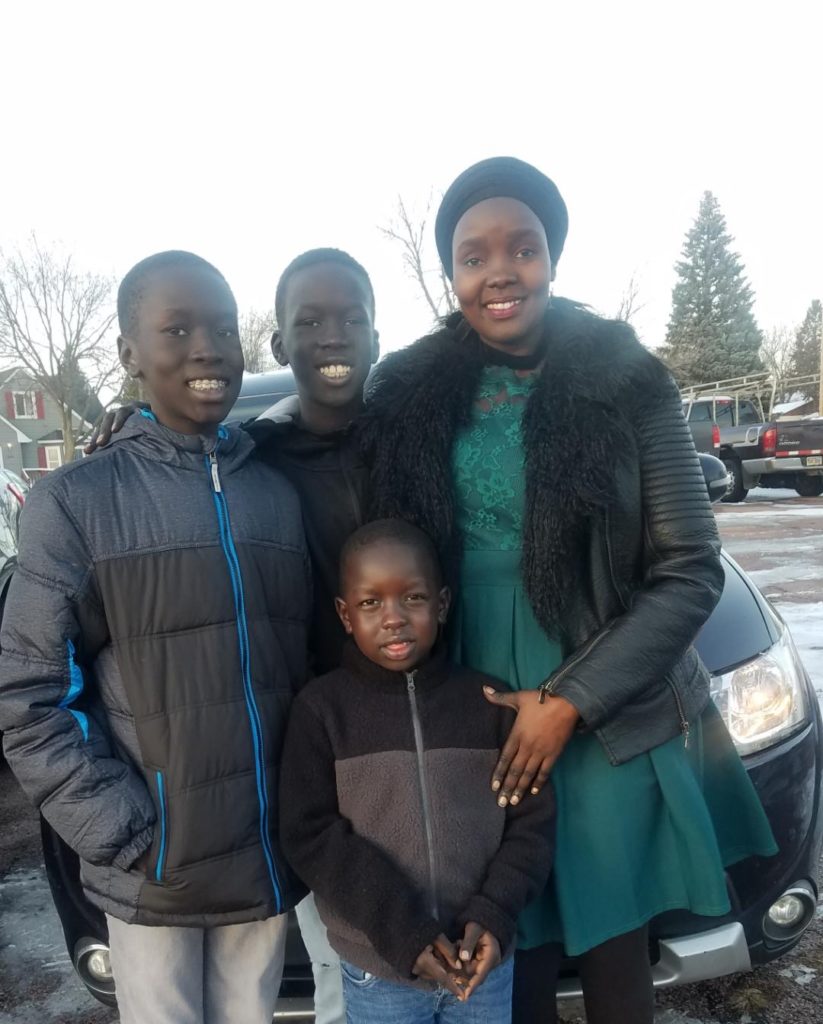
In 2000, Deng was chosen for a program that relocated Sudanese orphans to the United States. When she got the news she would be leaving for America, she was so happy couldn’t sleep. She moved to Kansas City and started a new chapter in her life. She graduated high school, then went on to community college. After school, she started waitressing before working private security in her early 20s.
She ended up moving to Sioux Falls, South Dakota for the same reason many young people move- to pursue a relationship. “I always tell people I moved to Sioux Falls for a pretty stupid reason,” she laughs. “I was thinking I would find a man. So that was pretty much the reason right there. I moved in with my younger son’s father, then we broke up. “
With so many people dependent on her as breadwinner, Deng had told her ex she would need a job as soon as she moved out, and he told her about the job at Smithfield. Work there was hard, but paid well. “A lot of people came to Sioux Falls because of Smithfield and what it was offering people. I know a lot of Sudanese families came here because of Smithfield.”
Deng put in her application and started right away as a Whizard knife operator trimming the fat from the loin as it zooms past. More than 10,000 pigs are processed there a day, and production at her plant alone accounts for 4-5% of all pork that is processed in the United States.
“When I started? Hard work. Hard work is what I thought of it, but you’re not really thinking of how hard it is, you are thinking of money and everything. Once you get the paycheck, you are able to pay for the apartment. You are able to put food on the table. These are the things that I was thinking.”
“Once you start doing something for the first time, something that you’ve never done, your muscles are going to reject it. Your body is going to reject it. So I was always sore.”
Deng has held a number of jobs in the plant over the years. She became a shift lead and works about 11-12 hours days six days a week. With the overtime and her higher pay, she was even able to take her children to Disney World last year.
“My boys, all three of them, it means I can give them what I never had. Which is a better life at a young age. When I went there, I cried, but it was tears of happiness. I am American by papers. I can bring my kids here. And that was something I did. I was so proud of myself. “
Deng’s also uses her salary to support five family members who are still in Africa. “So this job, it allows me to take care of everybody else, not just my boys. So that’s why I pick up overtime, regardless of me being tired. Every morning when I go to work, I put everything that the company offered me in order to go to work this food that I’m making doesn’t have anything that can go and harm someone. Because this food is going to families. It’s going to children. It’s going to mothers. It’s going to fathers. Uncles. Aunts. Everyone around the world. Working at the meat factory, I’m making food for people around the world. I think of that every day. “
When she and her coworkers first heard about COVID-19, thought it was just something that was going to stay in China. Then as the virus spread to the United States, it was difficult to tell how big of a threat it would be. “Most of us as immigrants and refugees, it’s like, well, maybe people are just being extra about it, you know? Maybe it’s not that bad. For me personally, I’ve been through so much. If this is just like a virus, you’re talking to someone who had malaria, you know? I survived that. So it was like, if it’s going to be like malaria, I can go through it. It’s just going to be like any other thing that I’ve been through. “
But then things changed. Cleaning was stepped up in the plant, but with 150-160 people on each shift and many of them working side by side, Deng and her coworkers started to grow nervous.
Then on Saturday, March 28th, her supervisor pulled her aside and asked if she had any fever or cough. One of the machine operators she had worked with that morning had tested positive, and Deng was sent home to quarantine for two weeks. “I didn’t say it out loud, but I’m thinking, ‘they are being silly.’”
“Monday night I went to bed feeling ok. I woke up about 2am with this sharp pain in my body that just feels like someone has stabbed me. So I went to the bathroom and said, maybe if I take a shower, it will be better. But when the water hit my body, it felt like a bunch of rocks were being thrown at my body.”
Her skin hurt, and by Thursday night her body was so exhausted, even walking was difficult and it felt like something heavy was sitting on her chest. The fear kicked in as she started having trouble breathing, and she refused to fall sleep because she was afraid of not waking up. The experiences from her childhood flooded back, along with the fear that her children would face the same ordeals she went through being an orphan and not having parents to support them. “If I die, my kids will go through the same thing I’ve been through. The loneliness. I’m thinking, I bring these kids to this world. I’ve been through everything I’ve been through and I never had a chance to tell them. They don’t know their mom. They don’t know what their mom went through. All they know is their mom is a work-a-holic, “she would do anything to give us a better life,” that’s all they know. It’s not a perfect world. I make it perfect for them. But if I die, this world is not perfect anymore.”
As more workers got sick, the situation in Sioux Falls started to get nation attention. The number of positive cases kept rising up to more than 800 workers, and the governor called on head of Smithfield to stop production. On April 12th, Smithfield announced indefinite closure, while more and more plants around the country found themselves facing similarly dire circumstances.
An estimated 22 meatpacking plants have closed – including union and non-union plants – at some point in the past two months. These closures have resulted in over 35,000 workers impacted and a 25 percent reduction in pork slaughter capacity as well as a 10 percent reduction in beef slaughter capacity.
Because of the importance of these workers to our national food supply, President Trump issued an executive order compelling these plants to stay open. But UFCW International President Marc Perrone called on the White House not to treat these workers as sacrificial lambs. “To protect America’s food supply, America’s meatpacking workers must be protected,” said Perrone. “The reality is that these workers are putting their lives on the line every day to keep our country fed during this deadly outbreak”
The UFCW is urging the Administration to immediately enact clear and enforceable safety standards that compel all meatpacking companies to provide the highest level of protective equipment through access to the federal stockpile of PPE, ensure daily testing is available for workers and their communities, enforce physical distancing at all plants, and provide full paid sick leave for any workers who are infected. Additionally, to protect the food supply and ensure these safety standards for workers are enforced, these plants must be constantly monitored by federal inspectors and workers must have access to representation to ensure their rights are not violated.
On Monday, the Sioux Falls plant began to partially reopen with about 250 employees. Deng is still recovering, but cannot afford to stay home for a long time. “My focus is to try to take care of myself so that when the company opens back up, then I’m ready to go. So that’s where my focus is.”
“Thank you very much for at least giving me the voice. A lot of people don’t understand, but living in the refugee camp, I don’t take anything for granted. Because of what I’ve been through and because of what I see happening to other kids that did not make it. But I am pretty sure they are looking over me and watching over me and I’m going to make them proud. “
The post UFCW Local 304A member speaks about life as a packinghouse worker during COVID-19 on “The Daily” podcast appeared first on The United Food & Commercial Workers International Union.
]]>The post UFCW calls on USDA and White House to protect meatpacking workers and America’s food supply appeared first on The United Food & Commercial Workers International Union.
]]>In the letters to USDA Secretary Perdue and Vice President Pence, the UFCW outlined five immediate steps to protect meatpacking and food processing workers as follows:
- Prioritize Essential Workers for Testing: In order to ensure the health and safety of workers and protect the food supply, essential workers, such as those in meatpacking and food processing, must be prioritized for testing.
- Immediate Access to PPE: Though social and physical distancing are essential to preventing the spread of COVID-19, workers still need access to PPE, such as masks and gloves. The reality is that many of our members lack the critical personal protection equipment necessary to do their job and reduce the risk of exposure. It is essential that the USDA, in conjunction with the White House Task force, prioritize all meatpacking and food workers for PPE to ensure the health and safety of these workers and to protect our food supply.
- Immediate Halt On Line Speed Waivers: In the first two weeks of this month, the USDA’s Food and Safety Inspection Service approved 11 regulatory waivers for poultry plants to increase their maximum line speed. Rather than protect our food supply and workers, these waivers guarantee that workers are more crowded along a meatpacking line and more workers are put at risk of either catching or spreading the virus. It is critical that the USDA immediately cease granting any new waivers and suspend all existing waivers that allow plants to operate at faster speeds.
- Mandate Social Distancing Where Possible: In order to responsibly protect workers and prevent spread of the disease, companies must enforce and practice six-foot social and physical distancing to the greatest extent possible, even if this means production slows down. Where distancing is not possible, companies should use plexiglass barriers to separate and protect workers, and/or ensure that all workers are provided with masks that can safely be used under these extreme conditions.
- Isolate Workers Who Show Symptoms or Test Positive for COVID-19: In light of the largest outbreak to date at Smithfield Foods in Sioux Falls, South Dakota, it is critical to identify and isolate workers who have tested positive or who exhibit symptoms of COVID-19. These workers should be allowed to quarantine at home, with pay, per the recommendations set by the Centers for Disease Control and Prevention.
In a press conference call last week, the UFCW released updates on the serious and deadly impact of the COVID-19 virus. Based on the most recent UFCW internal estimates, 20 meatpacking and food processing workers have died. In addition, at least 5,000 meatpacking workers and 1,500 food processing workers have been directly impacted by the virus. The estimates of those meatpacking and processing workers directly impacted includes individuals who have tested positive for COVID-19, missed work due to self-quarantine, are awaiting test results, or have been hospitalized and/or are symptomatic.
New estimates also show that 22 plants, both union and nonunion, have closed at some point in the past two months. These closures have impacted over 35,000 workers and reduced pork slaughter capacity by 25 percent and beef slaughter capacity by 10 percent.
During the conference call, the threat to America’s meatpacking workforce was highlighted in very personal terms by five workers who discussed the significant risks they and their coworkers are facing every day in some of the nation’s largest meatpacking facilities. Among the specific risks highlighted by these workers was the challenge posed by a lack of PPE, as well as increased line speeds which make social distancing all but impossible.
“America’s food processing and meatpacking workers are in extreme danger, and our nation’s food supply faces a direct threat from the coronavirus outbreak. If workers in these plants are as essential as our elected leaders say, then it’s about time that our elected leaders provide them with the essential protections they need. Make no mistake, without national safety standards to protect these workers from the coronavirus– more lives will be lost, more workers will be exposed, and our food supply will face jeopardy,” said UFCW International President Marc Perrone.
“Across this country, we are seeing the impact when the government fails to take steps to protect these essential workers. It needs to both provide testing and protective equipment and issue clear and direct safety guidelines that companies can and must enforce. This is not just about whether we will have enough beef, chicken, and pork to feed our families. It is – for these workers – a matter of life and death,” Perrone added.
You can read the USDA letter here and the letter to Vice President Pence here.
The post UFCW calls on USDA and White House to protect meatpacking workers and America’s food supply appeared first on The United Food & Commercial Workers International Union.
]]>The post The UFCW sues the federal government over dangerous line speed rule appeared first on The United Food & Commercial Workers International Union.
]]>This week, the UFCW International together with UFCW Locals 663, 440 and 2 filed a federal lawsuit in the United States District Court for the District of Minnesota seeking to stop the United States Department of Agriculture’s (USDA) new swine slaughter modernization rule, which eliminates the line speed limits in pork slaughter plants and reduces the number of Federal inspectors important for ensuring the safety of our food by 40%. Public Citizen Litigation Group represents the UFCW and local unions in the lawsuit.
In a press release, UFCW International President Marc Perrone said the following:
“Thousands of our members work hard every day in America’s pork plants to help families across the country put food on the table. Increasing pork plant line speeds is not only a reckless giveaway to giant corporations, it will put thousands of workers in harm’s way. This new rule would also dramatically weaken critical protections that Americans depend on to be able to select safe, healthy food to feed their families every day. The safety of America’s food and workers is not for sale and this lawsuit seeks to ensure this dangerous rule is set aside and these companies are held accountable.”
What is “line speed?”
Mark Nemitz, Assistant to Director of the UFCW’s Food Processing, Packing, & Manufacturing Division, and a former kill floor worker who knows what it’s like to be on the line firsthand, explained:
A line is basically a chain that is up above you in the air about fifteen feet. On that are these trolleys, and the hog will hang on that and go past you. Currently, with inspectors there we’re running about eleven hundred and six hogs per hour, and if we were to increase that, it would cause them to go faster and we’d have to just hurry through.
If we were to allow the line speeds to go up, we’re just putting more strain on workers’ bodies. More stressors. And it’s just not good.
Along with the food safety aspect, when you go faster, you have less time that you can see a piece of meat to detect any foreign material or any imperfections in it. I used to work on the line on the kill floor myself and you say ‘well, I can’t add more people to a lot of places because we’re pretty squeezed tight,’ so you put another person in a tight spot, you have knives in your hands, you’re moving faster. The animals have gotten bigger over the years, too, so there’s more cutting. There’s just a lot to this other than ‘we’re just going to speed this up and it’s going to be fine.’ It’s going to cause a lot of issues. Many times, we’re working around 95% of our capacity anyway as it is, and increasing the speed would just make it so hard. I can only imagine being on the line today.”
Taking legal action
In May 2018, more than 6,500 UFCW members who work in pork plants submitted comments to the USDA in opposition to the proposed rule that would “increase the line speeds where they work, threatening both them and the consumers they serve.” But the USDA chose to ignore those concerns.
“We have been objecting as the USDA prepared to promulgate this rule that allows companies to completely eliminate line speeds,” said Sarai King, Assistant General Counsel for the UFCW International. “In addition to line speed limitations, it also reduces the number of federal inspectors on the line by forty percent. When this rule came out, we were ready to challenge it immediately because we knew how badly it would affect our workers.”
The UFCW represents the largest number of workers in the meatpacking industry in the country. The three local unions who joined with the UFCW International to bring the lawsuit all have major packing plants and represent a significant number of workers impacted by the rule.
“We urged the USDA to consider how unsafe this rule would make our workplaces, but they refused,” said UFCW Local 663 President Matt Utecht in Minnesota. “We had no choice but to go to court to stop a rule that will endanger the health and livelihoods of thousands of UFCW members.”
“We have a lot of pride in the products our members produce,” said UFCW Local 440 President Leo Kanne in Iowa. “This rule will erode the quality and safety of the food we make and feed to our own families.”
“The USDA claims that this rule will make our food safer,” said UFCW Local 2 President Martin Rosas in Kansas. “But our members, who have worked in the industry for years, know firsthand it makes both the food they make and the plants they work in less safe. Let’s listen to the experts who work in these plants every day instead of big corporations just looking to make even more money.”
The complaint
“Shockingly, USDA admitted in its rule that it simply ignored the mounds of evidence that showed its actions will harm workers, while bending over backwards to help businesses. That violates basic principles of administrative law,” said Adam Pulver, an attorney with Public Citizen, which represents UFCW and the three locals in the case.
Under the Administrative Procedure Act, federal agencies like the USDA have to provide reasons for what they do that are supported by logical evidence. In this case, in the face of overwhelming evidence that injuries increase when line speeds increase, the USDA ignored the evidence and went instead with what big companies wanted, allowing them to increase the line speeds with no limits at all. The lawsuit objects to the fact that the USDA ignored the risks to worker safety and reduced the number of federal inspectors, which means that food may not be adequately appraised or properly inspected. The lawsuit asks the court to declare the rule against the law as “arbitrary and capricious,” which means that it was done without reasoned decision-making. It also asks the court to set aside the rule and prevent the USDA from further implementing it.
BACKGROUND
- The USDA published a new rule for pork meat inspections which removes limits on line speeds in swine slaughter plants and turns over major meat inspection tasks from federal inspectors to meat companies.
- The UFCW represents about 250,000 workers in the meatpacking and food processing industries and 30,000 workers in pork plants. UFCW members handle 71 percent of all hogs slaughtered and processed in the United States.
- In May 2018, more than 6,500 UFCW members who work in pork plants submitted comments to the USDA in opposition to the proposed rule that would increase the line speeds where they work, threatening both them and the consumers they serve.
- All the UFCW locals who are parties in the lawsuit represent pork slaughter workers. UFCW Local 663 is based in Brooklyn Center, Minn.; UFCW Local 440 is based in Denison, Iowa; and UFCW Local 2 is based in Bel Aire, Kan.
- The Modernization of Swine Slaughter Inspection rule will hurt workers across the country.
Hazards of Modernization of Swine Slaughter Inspection Rule:
- The Modernization of Swine Slaughter Inspection rule removes all limitations on line speeds in hog slaughter plants which will endanger the health and safety of tens of thousands of workers in the hog slaughter industry.
- Even at current line speeds, swine slaughter and processing workers face many job risks that can lead to severe injury, illness and death.
- There is no evidence that line speed increases can be done in a manner that ensures food and worker safety.
- In 1997, the USDA created a pilot program called the HACCP-Based Inspection Models Project (HIMP) which allowed five hog slaughter plants to test a new food safety program. The hog slaughter pilot program revealed serious safety issues including a Clemens food plant in Pennsylvania which reported injuries severe enough that two workers were hospitalized, and one suffered an amputation.
- The Modernization of Swine Slaughter Inspection rule includes no requirement or funding to train plant employees on inspection techniques that were previously performed by USDA inspectors and are now their responsibility.
- Increased line speeds will disproportionately hurt women and people of color.
Key Facts About Swine Workers:
- Meatpacking workers in hog slaughter plants work in cold, wet, noisy, and slippery conditions making tens of thousands of forceful repetitive motions on each shift.
- Research shows that the fast pace in pork plants, coupled with the forceful and repetitive nature of most of the jobs, leads to high rates of injuries and health issues.
- Meatpacking workers are injured at 2.4 times the rate of other industries. These injuries result in lost time or restrictions at three times the rate of other industries and they face illness rates at 17 times the rate of other industries.
- The previous maximum line speed for swine was 1,106 hogs per hour.
The post The UFCW sues the federal government over dangerous line speed rule appeared first on The United Food & Commercial Workers International Union.
]]>The post New Poll: Americans Strongly Oppose USDA Move to Weaken Food Safety at Pork Plants appeared first on The United Food & Commercial Workers International Union.
]]>As America’s largest private-sector union representing thousands of pork workers, UFCW works to protect the safety of the hardworking men and women at swine slaughter plants as well as the food they pack and process. A new poll released this week shows that a strong majority of Americans agree with us and oppose the U.S. Department of Agriculture’s proposal to weaken food safety standards by eliminating line speed limits and drastically reduce inspections at pork processing plants.
The recent USDA proposal would cut federal safety inspectors at processing plants by 40 percent and would allow the slaughter line speeds to run at any speed the company wants.
Both of these changes would endanger the safety of these workers and the food millions of Americans across the country count on to feed their families every day.
According to the poll from Hart Research Associates, 64 percent of Americans “opposed the USDA’s proposal to eliminate the speed limits on pig slaughter lines.” Opposition was strong across all party lines with 69 percent of Democrats, 66 percent of Independents, and 58 percent of Republicans agreeing that speed limits should remain in place.
Poll respondents in the Midwest, where a large portion of the pork industry is based, expressed even stronger disapproval of the proposal, with 70 percent opposing the proposed changes to plant safety requirements.
Just last month, UFCW President Marc Perrone issued a statement in opposition to the proposal:
“For over 100 years, USDA inspectors have played a vital role in ensuring the safety of our pork. This change to USDA meat inspection rules would dramatically weaken the critical protections that Americans depend on to be able to select safe, healthy food to feed their families every day.
“Shifting the responsibility onto pork workers, instead of the USDA inspectors who are specifically trained for this critical job, is needlessly reckless and dangerous. Our members in pork plants work incredibly hard already and stand with families across the country to demand USDA keep our food safe and let inspectors do their job.”
We stand in agreement with Americans across the country deeply concerned by this USDA proposal that threatens the safety of workers at these plants, as well as the safety of the pork products for consumers in the United States and around the world.
The post New Poll: Americans Strongly Oppose USDA Move to Weaken Food Safety at Pork Plants appeared first on The United Food & Commercial Workers International Union.
]]>The post Organizing Is “InStyle” With Local 770 Member appeared first on The United Food & Commercial Workers International Union.
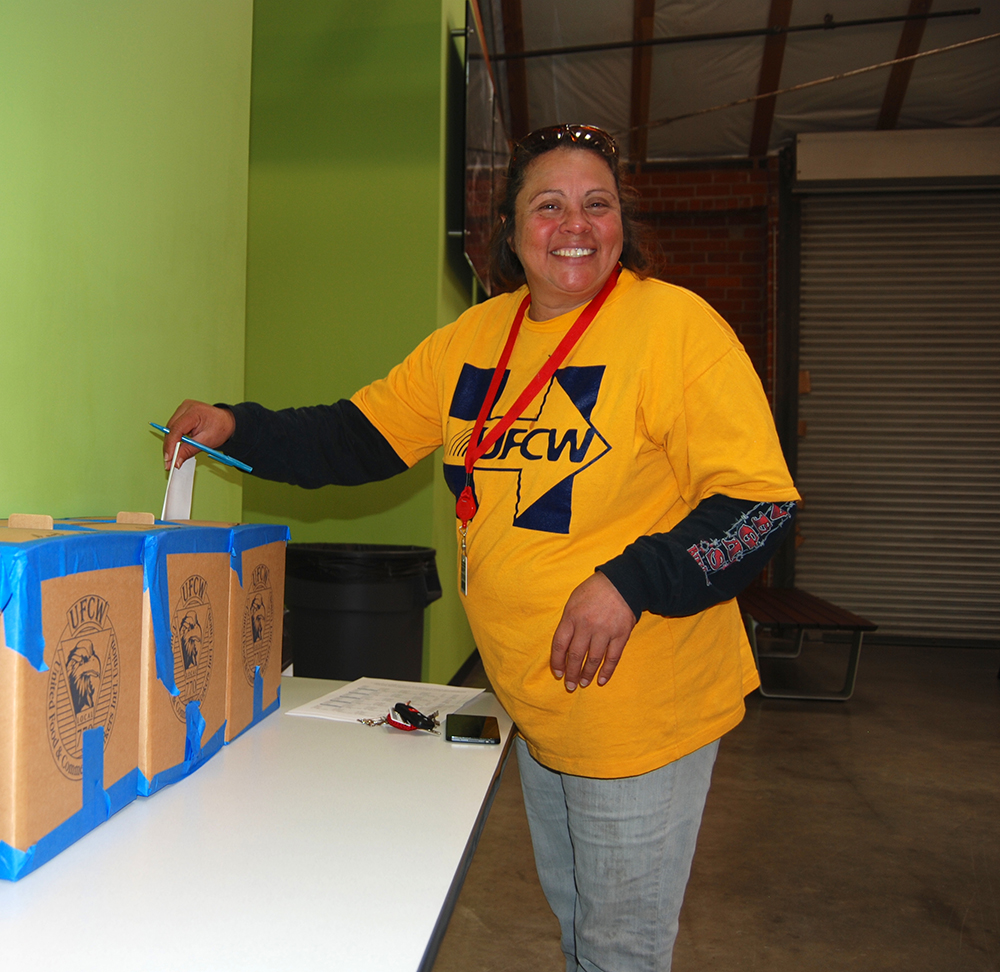
]]>More than 7,000 pork ribs are cut in a 4-hour shift –about 30 ribs per minute– at the Farmer John’s pork processing plant in Vernon, California. UFCW 770 member, Rina Chavarria, and her co-workers in the rib conversion department work diligently to meet the production’s fast-paced demand. Despite performing a physical taxing job, Rina still finds energy and extra time to organize and represent her co-workers as a union shop steward. She was recently featured in the “badass women” series of InStyle magazine.
Roughly 1,200 UFCW 770 union members work at the Vernon Farmer John hog slaughterhouse, which is owned by Smithfield Foods. They produce bacon and other pork products, including the famous “Dodger Dog” hot dog that many people enjoy. Rina Chavarria has worked at Farmer John for 5 years. She shares her thoughts about her experience:
“I feel good that I was considered for this story. Very often, people don’t realize that as working women we are on our own working to provide for our children and to be able to help them succeed in life,” says Rina who has two children Cynthia,18 and Marco, 10. “I teach my children to be fighters. I tell them to dream big and fight for those dreams. And to be good people,” she says. For her, being featured in an InStyle article was “an acknowledgment of us women who are hardworking people and who don’t chicken out,” she points out laughing.
“I really enjoyed the experience of doing the photo shoot and the interview. It was a very nice, new experience. I also liked it because I had the opportunity to meet other women from different industries such as farm workers, caregivers, and hotel workers.”
Rina Chavarria has been a member of the UFCW 770 bargaining committee since 2016 when she was actively engaged in contract negotiations. Last year, she became a shop steward within the plant. She was also involved in the bargaining sessions of 2018 when union members won a union contract that included wage increases, affordable healthcare, and union security. The contract also secures protections and other benefits.
“Being a UFCW 770 member represents a great value to me because I have the opportunity to be a voice for my co-workers. I’m involved in the Union to help my co-workers as much as I can. As a shop steward I’m more aware of the problems that my co-workers face in the plant, so I to try to find a way to resolve them. I love helping my co-workers. That’s why I enjoy being a Union steward. And I really like defending my rights and the rights of my co-workers.”
“Being a shop steward empowers me because the bosses look at me differently, and people in the plant look at me differently. I don’t know, you feel kind of important when your co-worker comes to you and asks you for advice or asks you for help. When I’m able to help them, I feel great satisfaction,” she adds.
Last year, Rina completed a 3-day health and safety training and she also represented her local at a UFCW International’s Packinghouse chain meeting in Nebraska. She is always eager to collaborate with her union to make sure her fellow workers at Farmer John have respect, dignity and a voice on the job.
The post Organizing Is “InStyle” With Local 770 Member appeared first on The United Food & Commercial Workers International Union.
]]>The post Beyond TSA: how is the shutdown impacting our national food security? appeared first on The United Food & Commercial Workers International Union.
]]>There have been a number of recent articles highlighting the air-travel safety issues caused by the government shutdown as more and more TSA agents are forced to call out from work. TSA agents are a visible reminder of the work that federal employees do, but some of the most damaging and dangerous impacts from the government shutdown are ones that are also out of sight of the average American. After all, many people pass through the airport, but not that many people regularly visit food processing facilities.
Food Safety
The FDA oversees 80 percent of our food supply and has suspended all routine inspections of domestic food-processing facilities (Washington Post) and canceled more than 50 high-risk inspections. (Washington Post) The FDA halted many inspections on January 9th, though the agency also resumed the most high-risk ones on January 15th, when FDA Commissioner Scott Gottlieb announced that furloughed food inspectors would be recalled to carry on their work without pay.
40% of FDA workers are furloughed
40 percent of the FDA’s employee’s remain furloughed and it is important to recognize that just because inspections may not be considered “high risk” does not mean they are “no risk” and should be left without inspectors. These decisions about what merits inspection or not are also being made without the informed consent of the American people, who trust that the food they are eating has been held to certain agreed upon standards and guidelines.
We re-starting high risk food inspections as early as tomorrow. We’ll also do compounding inspections this week. And we started sampling high risk imported produce in the northeast region today. We’ll expand our footprint as the week progresses. Our teams are working.
— Scott Gottlieb, M.D. (@SGottliebFDA) January 14, 2019
Risk of recalls has increased
Since the last extended federal shutdown in 2013, the number of meat and poultry products recalled in the US for potentially life-threatening health hazards has nearly doubled. A new report shows the number of meat and poultry products recalled in the United States for potentially life-threatening health hazards has nearly doubled since 2013, raising new concerns about food safety. A recent report by TIME highlighted that if shutdown-caused furloughs continue to impede FDA operations, “federal regulators might not even realize outbreaks are happening” in the first place.
Long term impacts
Workers at the U.S. Department of Agriculture, which oversees meat and poultry, have all continued to perform inspections without pay. It is important to recognize that much of the work inspectors do requires a high level of training and experience, and filling vacant positions with qualified employees can be challenging. Though the dedication shown by the inspectors working without pay because of their commitment to the common good is inspiring, the longer this shutdown continues, the more we are asking those workers to sacrifice. If a number of inspectors are forced to take other work in order to support their families, there is a potential for long-term consequences that will be felt beyond when the federal government resumes its responsibilities.
Grocery Sales and Food Access
This week, nearly 40 million low-income Americans received their February Supplemental Nutrition Assistance Program (SNAP) benefits (or food stamps). Beyond the hardships endured by families who reply on SNAP, the program makes up a significant percentage of grocery sales and the harmful impact of the shutdown threatens not only families, but businesses up and down the supply chain.
SNAP represents a large portion of grocery sales
SNAP accounts for about 10 percent of the food that U.S. families buy for their homes. Disruption to the SNAP program can cause reduced revenue for grocery stores, disruption to food supply chains, reduced hours and even job cuts for workers, and significant consequences for local economies.
Uncertainty triggering food shortages
Due to the federal government shutdown, the benefit’s release is occurring weeks earlier than scheduled. It is being reported that recipients may have to wait 40 days or longer before additional assistance is available causing state agencies to warn recipients to ration their benefits.
Shutdown induced uncertainty is anticipated to cause worried hardworking families using food stamps, to stock up on food for the weeks ahead and triggering food shortages at local supermarkets.
Out of touch leadership
In addition to damage done by the disruption of the SNAP program, many federal workers are wondering how to feed their families when they are not receiving a paycheck. This is especially troubling as Secretary of Commerce Wilbur Ross recently expressed confusion over why federal employees would be turning to food banks instead of just taking out loans to get through the shutdown. Donald Trump reacted to the comments by suggested grocery stores need to “work along” with federal employees.
Donald Trump, defending Wilbur Ross, says government workers not receiving a paycheck because of the #TrumpShutdown can simply convince their local grocery stores to “work along” with them. pic.twitter.com/bIvu2CJxHb
— Keith Boykin (@keithboykin) January 24, 2019
Food access is both a humanitarian issue and bad for business
When you consider that the potential loss of sales in the grocery industry is not only a threat to business, but represents every day Americans who cannot afford to eat right now, the depth of the crisis we are in as a country becomes clear. Grocery workers and grocery stores are united in calling for an end to the shutdown before further disruptions occur in our food stores and on our nation’s kitchen tables.
A partial federal government shutdown started on December 22, 2018 after President Donald Trump demanded a $5.7 billion appropriation for border wall construction be included in the federal budget, something Democrats refused to agree to. The impasse has resulted in the longest government shutdown in U.S. history. Today, many Federal workers will miss their second paycheck in a row.
The post Beyond TSA: how is the shutdown impacting our national food security? appeared first on The United Food & Commercial Workers International Union.
]]>